
2026 Guide to Purchase Hotels For Sale as an Investor
By Financial Capital Intelligence & Strategy Group
Published Special Report on Alternative Corporate Finance and High-Growth Capital Markets
To capitalize on opportunities when looking to buy hotels for sale, investors must first benchmark current macro conditions.
The commercial hospitality sector in 2026 presents one of the most compelling, asymmetric investment environments since the post-Great Financial Crisis recalibration.
As interest rates stabilize and capital spreads re-align, private equity groups, family offices, and institutional syndicates are aggressively deploying capital to purchase hotels across North America. However, successfully executing an acquisition requires a rigorous understanding of property valuation, debt structures, franchisor mandates, and market cycles.
Whether you are an institutional hotel buyer, an ambitious hotel investor, or a seasoned hospitality operator, navigating today’s landscape requires moving beyond surface-level real estate metrics. This comprehensive guide covers everything you need to know about evaluating hotels for sale, securing hotel purchase financing, analyzing closed deal comps, and positioning your asset portfolio for maximum risk-adjusted yield.
1. The 2026 Hospitality Investment Landscape: Market Dynamics & Cap Rates
To capitalize on opportunities when looking to buy hotels for sale, investors must first benchmark current macro conditions. The 2022–2024 period of elevated borrowing costs caused a temporary transaction slowdown, leaving motivated sellers and creating prime entry points across primary, secondary, and tertiary markets.
When analyzing hotels for purchase, seasoned investors know that the headline price tag is only part of the capital equation.
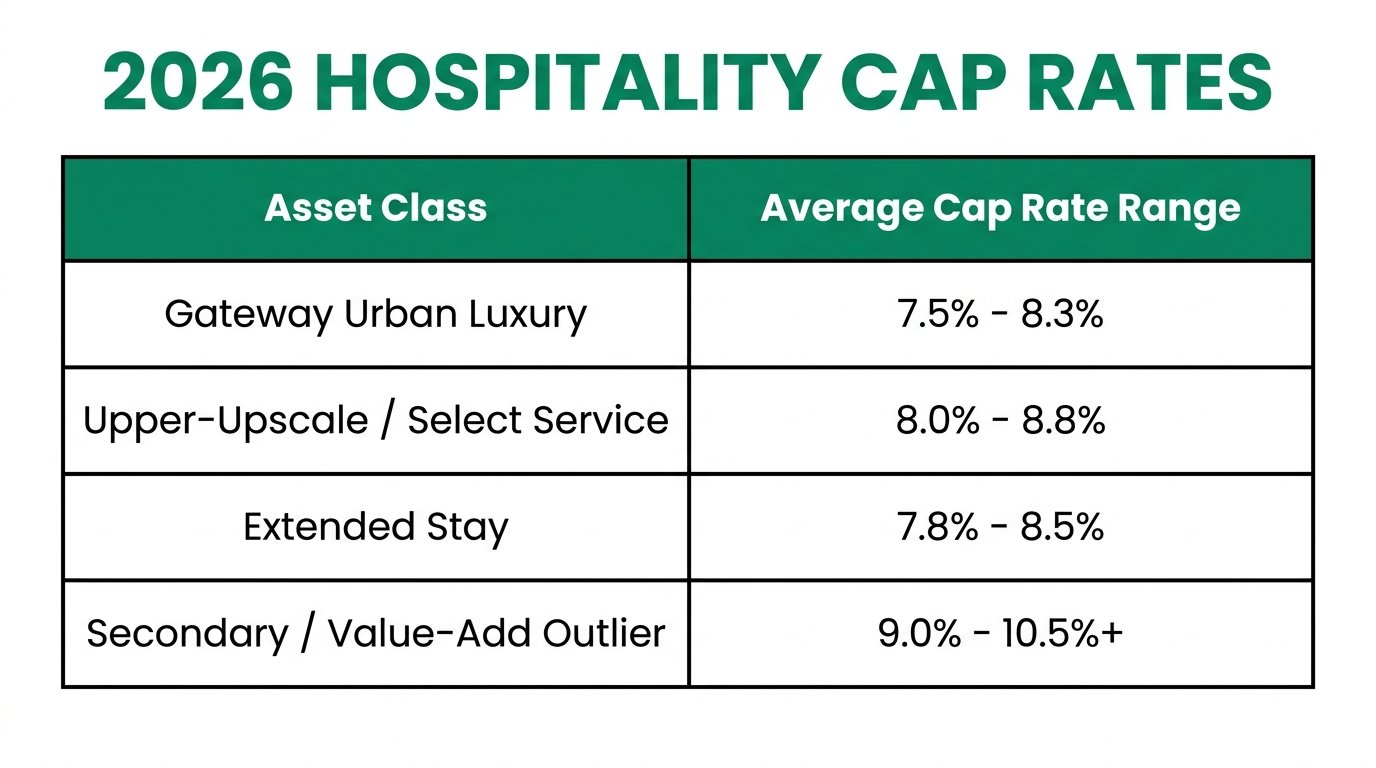
In 2026, national stabilized capitalization rates for hospitality assets hover around 8.0% to 8.5%, with luxury urban gateway properties and high-yield extended-stay portfolios trading near 8.3%.
Macro Drivers Shaping 2026 Hotel Investing
Constrained New Supply: Ground-up development remains suppressed due to historical construction cost inflation and conservative bank underwriting. This supply shield protects existing assets from immediate inventory dilution.
Conversion & Repositioning Surge: Capital is increasingly favoring property conversions and brand upgrades over ground-up builds.
Bifurcated Consumer Demand: Upper-tier lodging and experiential luxury continue to exhibit strong Average Daily Rate (ADR) pricing power, while economy and midscale operators focus heavily on cost management and operational efficiency.
2. How Much Does It Cost to Buy a Hotel? (Underwriting & Valuations)
A primary question for entry-level syndicates and expanding funds alike is: how much does it cost to buy a hotel?
The short answer: Acquisition costs vary widely—from $2.5 million for a 40-room independent roadside motel in a tertiary market to over $150 million for a 300-room luxury full-service asset in a tier-one gateway city.
To determine true asset value when evaluating any hotel for sale, institutional underwriters analyze three core operational metrics:
Key Operational Metrics
Occupancy Rate: The percentage of available rooms occupied over a given timeframe.
Average Daily Rate (ADR): Total room revenue divided by the total number of paid occupied rooms.
Revenue Per Available Room (RevPAR): Calculated as Occupancy X ADR or total room revenue divided by total available rooms.
Underwriting Beyond Gross Yield: The Real Cost Formula
When analyzing hotels for purchase, seasoned investors know that the headline price tag is only part of the capital equation. True cost accounting must incorporate:
Total Capital Required = Purchase Price + Closing Costs + Initial PIP Requirements + Operating Working Capital
Property Improvement Plans (PIPs): Flagged properties (e.g., Marriott, Hilton, Hyatt) require mandatory renovations upon transfer of ownership. A heavy PIP can add $10,000 to $35,000 per key to your total acquisition basis.
FF&E Reserves: Lenders and franchisors mandate reserving 4% of gross revenues annually into a Furniture, Fixtures, and Equipment (FF&E) escrow account to cover asset degradation.
3. Navigating Hotel Purchase Financing in 2026
Securing optimal hotel purchase financing is often the deciding factor in whether a deal achieves its targeted Internal Rate of Return (IRR). Unlike traditional real estate asset classes backed by long-term corporate leases, hotels are operational, daily-lease businesses, which means lenders price hospitality debt with a higher risk premium.
If you are exploring structured debt or private balance-sheet capital, reviewing active market options on Funding Solutions will help you pair equity with competitive lender debt terms.
Premier Financing Avenues
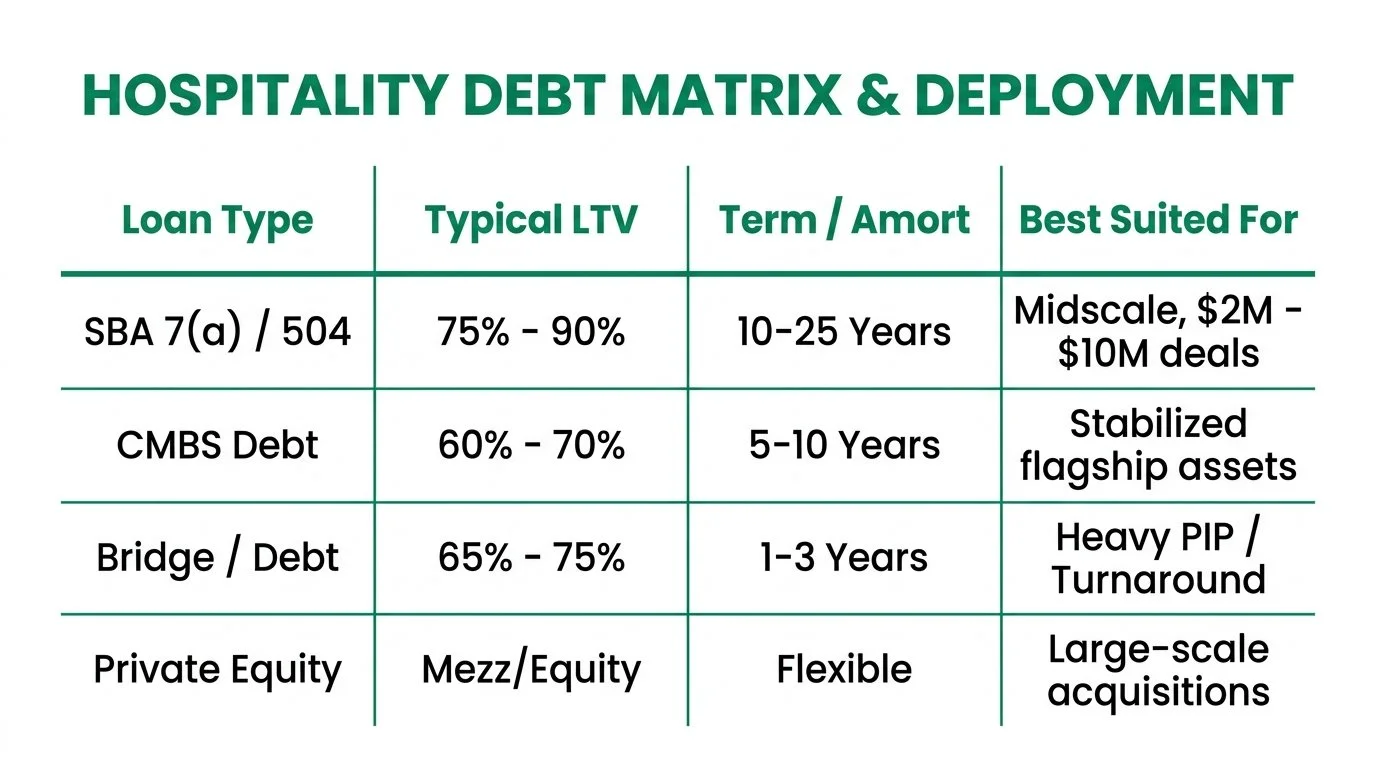
SBA 7(a) and 504 Loans: Ideal for first-time operators and deals under $10 million. SBA programs offer high Loan-to-Value (LTV) ratios up to 85–90%, making them accessible for owner-operators.
Conventional Commercial Real Estate Loans: Regional and national banks provide 60–70% LTV on stabilized properties, requiring strong Debt Service Coverage Ratios (DSCR) typically clearing 1.35x to 1.50x.
CMBS (Conduit) Loans: Non-recourse financing popular for large, flagged assets with predictable cash flow profiles.
Bridge & Mezzanine Debt: Essential for value-add acquisitions where traditional cash flow metrics do not immediately support permanent bank debt.
If you are exploring structured debt or private balance-sheet capital, reviewing active market options on Funding Solutions will help you pair equity with competitive lender debt terms.
4. Step-by-Step Acquisition Blueprint: How to Buy Hotels For Sale
Executing a successful transaction requires a methodical acquisition framework. Below is a structured step-by-step roadmap for every serious hotel buyer.
1.Define Investment Thesis & Target Criteria: Select location, asset scale, and franchising preferences.
Establish your core investment criteria: asset scale, geography, and brand strategy. Decide whether your platform will target unflagged boutique properties or franchised select-service assets.
2.Sourcing & Deal Screening: Review public listings, broker networks, and off-market deals.
Source acquisition targets across public platforms, commercial broker networks, and direct-to-owner off-market campaigns. Leverage specialized listing hubs to evaluate active opportunities.
3.Initial Financial Analysis & LOI Submission: Model pro forma scenarios and submit intent terms.
Analyze historical Trailing-12 (T12) income statements and STR reports. Draft and submit a non-binding Letter of Intent (LOI) outlining purchase price, earnest money deposit, inspection timelines, and financing contingencies.
4.Comprehensive Due Diligence & PIP Audit: Conduct physical, legal, and operational reviews.
Once under contract, execute full due diligence: Phase I Environmental Site Assessments (ESA), structural engineering reviews, title searches, financial audits, and a franchisor PIP inspection.
5.Debt Capital Structuring & Franchisor Approval: Finalize loan commitments and sign brand agreements.
Finalize loan underwriting with your lender while submitting background checks, liquidity statements, and operational experience profiles to the franchisor for brand transfer approval.
6.Closing & Operational Transition: Complete escrow funding and handover management.
Fund escrow, execute final closing documents, and hand over property management to your preferred internal team or third-party management firm.
5. Case Studies & Active Portfolio Examples
Examining real-world assets provides critical insights into how equity syndicates evaluate acquisition basis, location advantages, and franchising power.
Below are prime operational examples across major North American metropolitan markets:
Finding premium acquisition targets requires building a multi-channel deal sourcing engine.
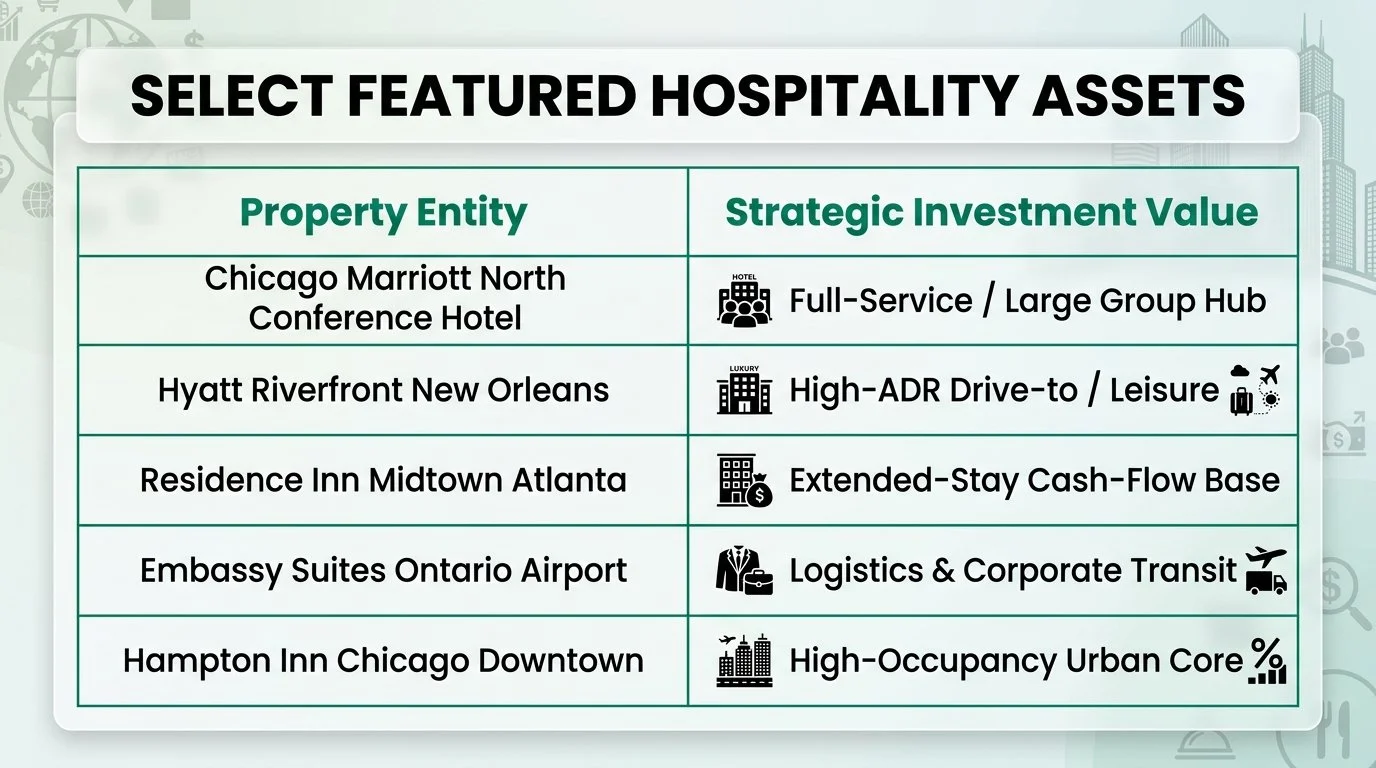
Full-Service Suburban Anchors: Properties like the Chicago Marriott North Conference Hotel showcase how large-scale meeting space and full-service dining facilities generate diversified revenue streams beyond room bookings.
Core Urban Hospitality: Assets such as the Hampton Inn Chicago Downtown demonstrate the ongoing demand for select-service properties situated within walkable business corridors.
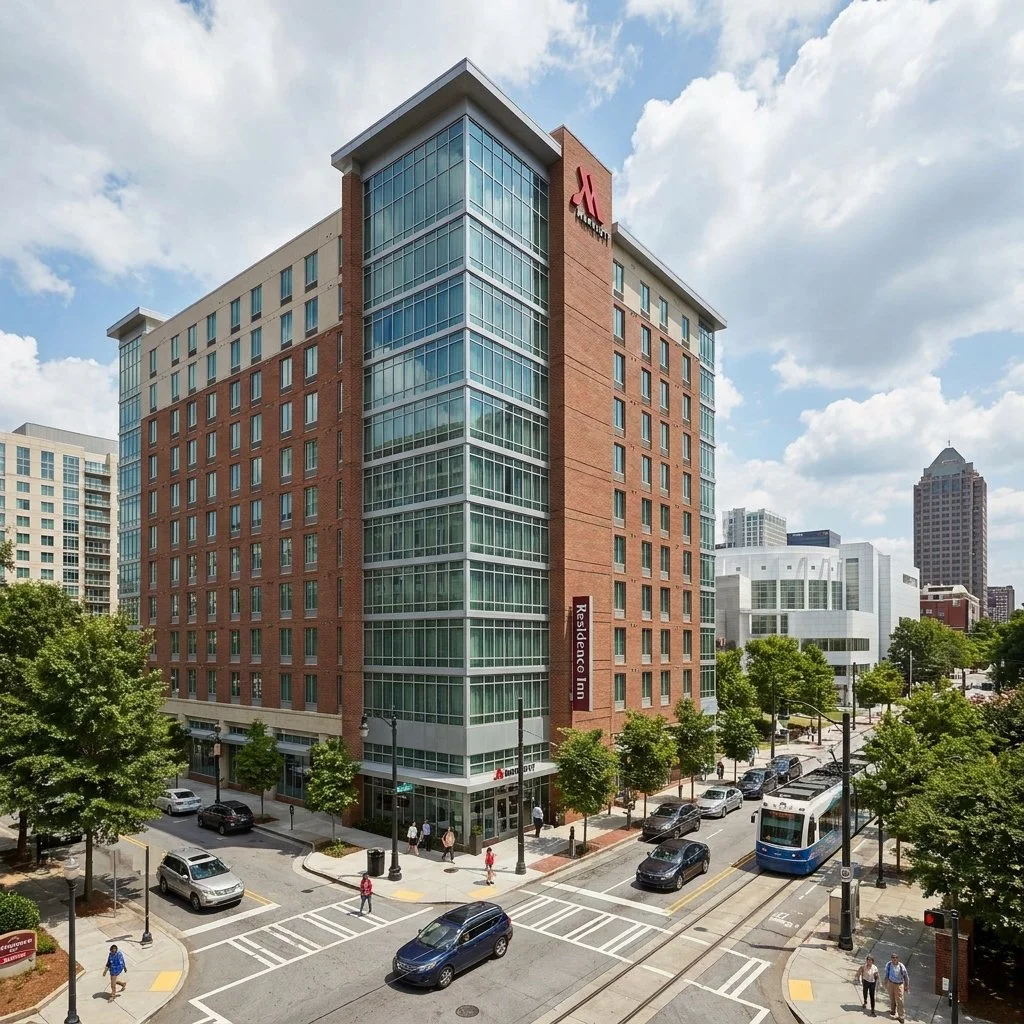
Extended-Stay Powerhouses: Properties such as the Residence Inn Midtown Atlanta highlight why extended-stay models remain investor favorites due to leaner operational overhead and sustained multi-week occupancy.
Drive-To & Destination Markets: High-yield regional assets such as the Hyatt Riverfront New Orleans and airport transit hubs like the Embassy Suites Ontario Airport emphasize how geographic demand generators insulate revenue across seasonal shifts.
To review active deal flow, underwriting packages, and equity joint-venture structures across these sectors, visit our centralized platform at Funding My Venture and explore curated assets listed under Hospitality Businesses.
6. Sourcing Inventory: How to Find Hotels For Sale Near You
Finding premium acquisition targets requires building a multi-channel deal sourcing engine. Relying solely on broadly distributed public broker listings often leads to competitive bidding wars that compress entry cap rates.
Primary Sourcing Channels
Off-Market Broker Relationships: Experienced hospitality brokers maintain pocket listings for hotel owners who prefer discrete transaction processes to protect staff morale and customer bookings.
Direct Owner Outreach: Utilizing public land records and hotel license databases to contact owners of aging assets facing upcoming debt maturities or mandatory franchise PIP deadlines.
Institutional Deal Platforms: Utilizing dedicated commercial platforms simplifies searching for properties. If you are starting your search, refer to our specialized analytical guide: The Best Guide on Finding a Hotel For Sale Near Me.
Regional Market Spotlights: Targeted regional guides—such as The Best Guide on Finding Chicago Hotels For Sale—offer submarket analyses, zoning considerations, and local RevPAR trends for major metropolitan areas.
7. Operational Models: Independent vs. Franchised (Flagged) Hotels
A fundamental decision for every hotel owner and hotel investor is choosing between an independent boutique model and a franchised (flagged) property.
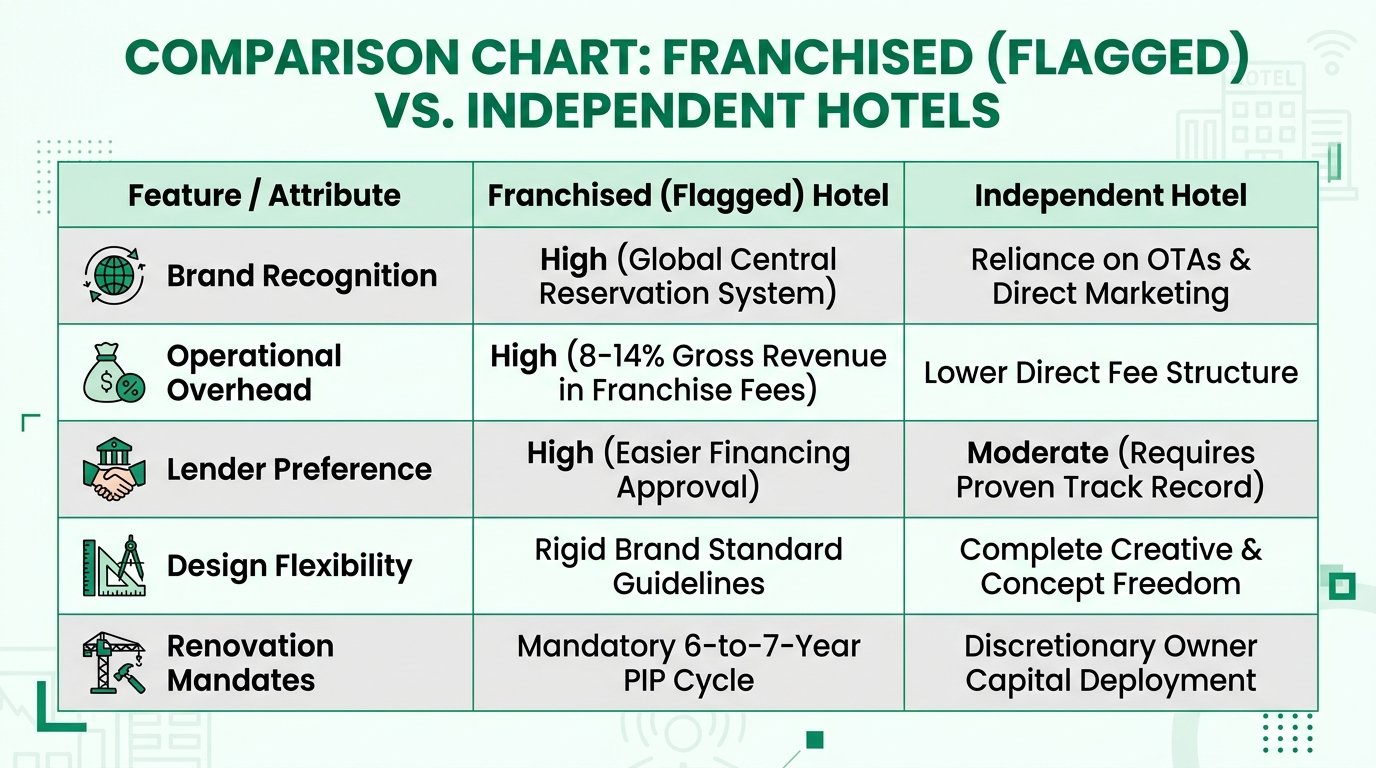
For owners declaring "I am ready to sell my hotel," partnering with a platform that directly connects active buyers with verified listings streamlines the transaction lifecycle.
Working with an experienced hospitality operator or asset management firm helps balance these trade-offs, ensuring operational efficiency regardless of your chosen brand structure. For groups looking to align capital with vetted management partners, specialized syndicators like Summit Hospitality Capital offer collaborative co-investment frameworks.
8. The Seller’s Perspective: How to Sell a Hotel for Maximum Valuation
Understanding the sell-side strategy is equally vital for investors planning their exit or looking to sell hotel inventory at top-of-market multiples. Knowing how to sell a hotel effectively can drastically increase realized IRR upon disposition.
Critical Sell-Side Steps
Clean Up Trailing Financials: Ensure T12 statements, tax returns, and balance sheets are fully reconciled. Verify that non-recurring capital expenses are clearly separated from core operational costs.
Address Deferred Maintenance: Completing minor maintenance items before listing prevents hotel buyer re-contracting during physical inspection phases.
Engage Professional Brokerage: Choosing whether to list a hotel for sale publicly or conduct a targeted off-market pitch depends heavily on your timeline and asset scale.
Prepare the Data Room: Build a secure data room containing STR reports, historical utility bills, franchise agreements, staffing lists, and property tax records.
When a hotel sold private equity transaction closes, the disposition strategy frequently includes managing 1031 tax-deferred exchanges or reinvesting capital into higher-yielding hospitality opportunities. For owners declaring "I am ready to sell my hotel," partnering with a platform that directly connects active buyers with verified listings streamlines the transaction lifecycle.
9. Why Experienced Investors Choose Funding My Venture
In commercial real estate, speed-to-capital, accurate market intelligence, and institutional deal flow are essential advantages.
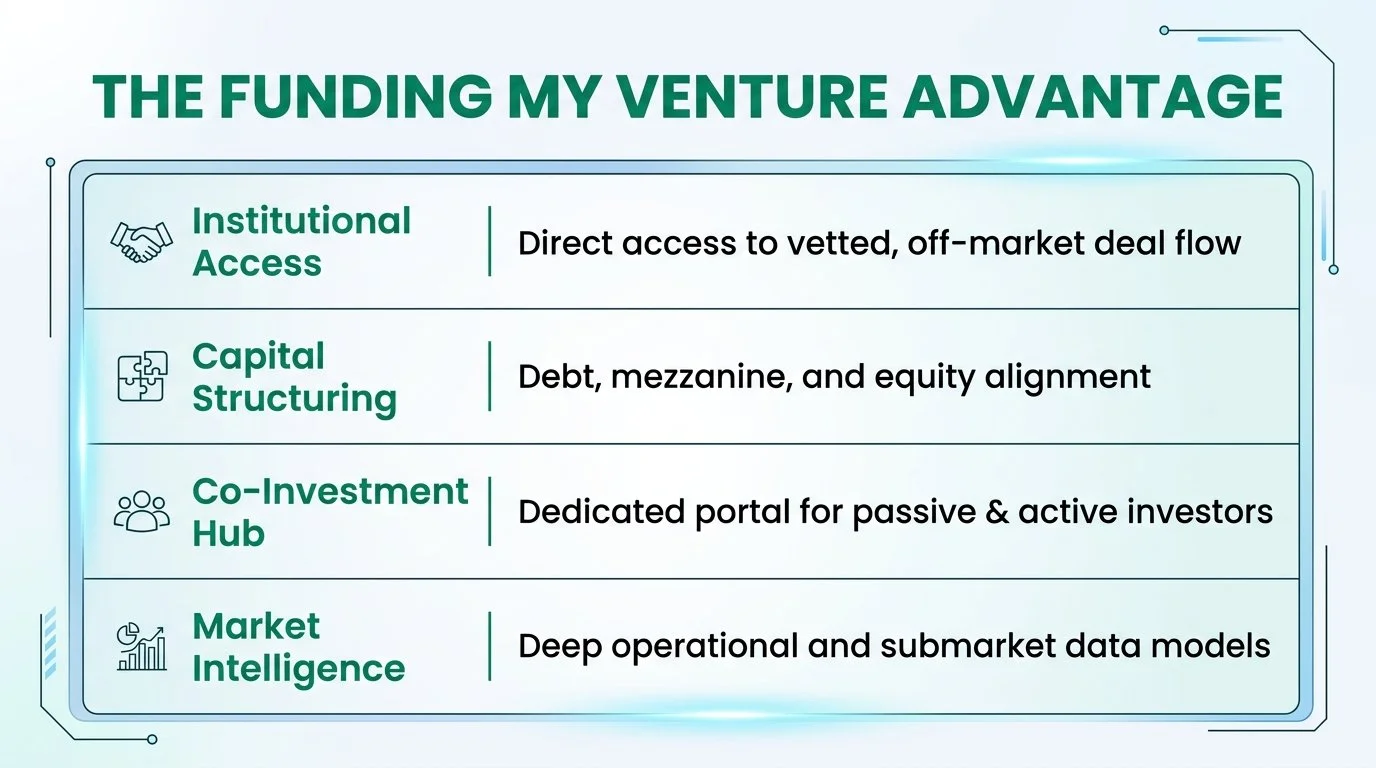
To review active deal flow, underwriting packages, and equity joint-venture structures across these sectors, visit our centralized platform at Funding My Venture and explore curated assets listed under Hospitality Businesses.
To learn more about how our platform supports developers, syndicates, and equity partners, read our full platform breakdown: Why Business Owners Choose Funding My Venture.
If you are a private investor or fund manager seeking vetted hospitality opportunities, access our centralized portal at the Funding My Venture Investor Hub.
10. Key Takeaways & 2026 Action Plan for Hotel Investors
The hospitality sector rewards disciplined, data-driven real estate investors. As you evaluate opportunities to buy hotel properties this year, keep these core principles top of mind:
Underwrite Conservatively: Factor in realistic debt service coverage, rising labor costs, and mandatory FF&E reserves.
Audit the PIP Early: Never submit a binding offer without assessing the franchisor’s mandatory renovation requirements.
Focus on Location Demand Generators: Ensure your target asset is supported by strong, multi-faceted demand sources (e.g., healthcare hubs, corporate campuses, convention centers, or major leisure attractions).
Partner with Top Operators: Whether managing internally or hiring a third-party hotel operator, operational execution directly determines cash flow performance.