
How to Sell My Company to Private Equity: LBO Structuring, Multiples, and Negotiations
By Wall Street & Middle-Market Deal Desk
Bloomberg Deals Special Report — Private Equity & Institutional Capital

Understanding how to sell my company to private equity requires a complete shift from traditional "Main Street" business sales.
Executive Summary: The Institutional Liquidity Surge
The private equity asset class in 2026 is defined by an intense, structural drive to deploy capital. Following an extended cycle of conservative underwriting and macroeconomic recalibration, global private equity dry powder has consolidated at historical highs. General Partners (GPs) face acute pressure from Limited Partners (LPs) to transition out of historic fund deployment pauses and actively generate realizations.
Consequently, middle-market financial sponsors are aggressively targeting high-quality, founder-led enterprises. For an entrepreneur calculating how to sell my company or evaluating options to sell a company, the institutional landscape offers unprecedented premium multiples—provided the target enterprise can withstand the rigorous engineering of a modern leveraged buyout (LBO).
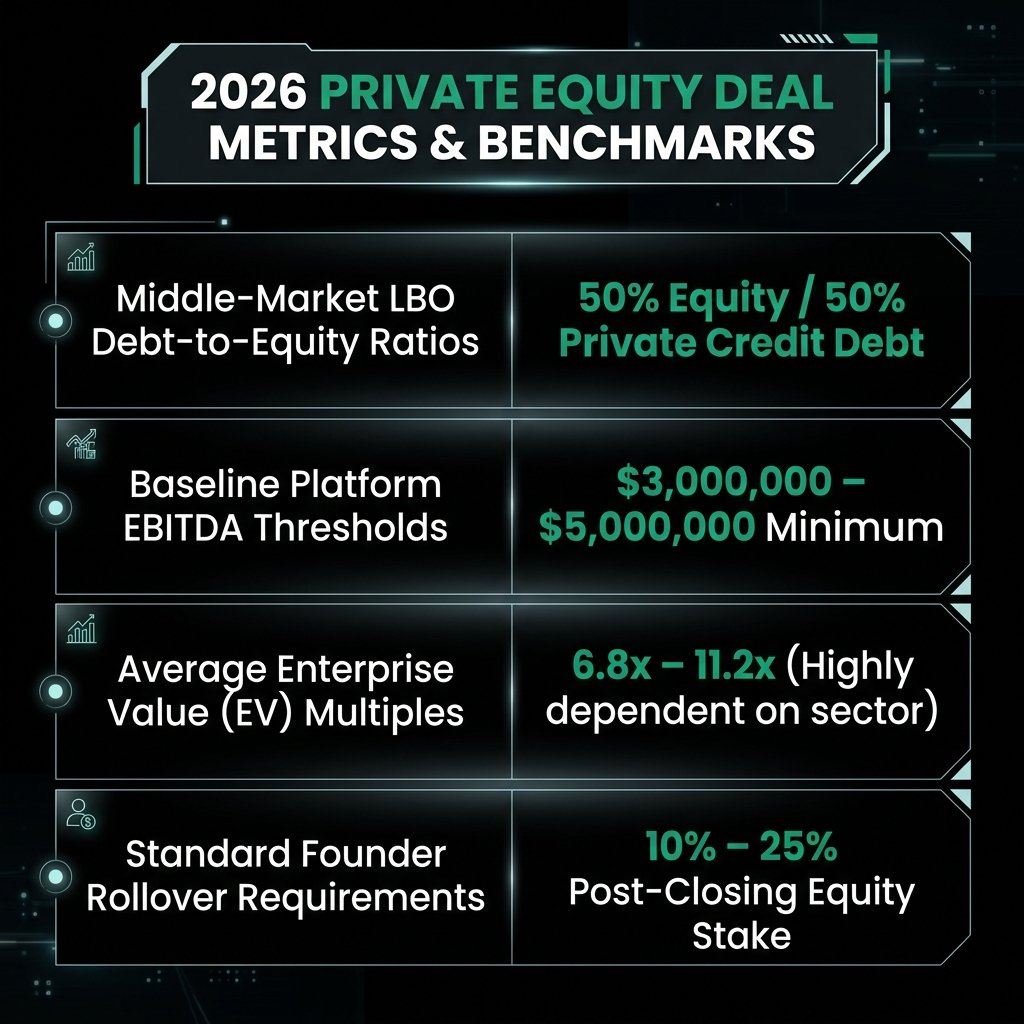
2026 Private Equity Deal Metrics & Benchmarks
Understanding how to sell my company to private equity requires a complete shift from traditional "Main Street" business sales. Sponsors do not acquire businesses to operate them statically; they acquire them as financial platforms designed for aggressive compounding, operational optimization, and subsequent secondary sales.
Section I: Decoupling the Private Equity Mindset – Platform vs. Add-On
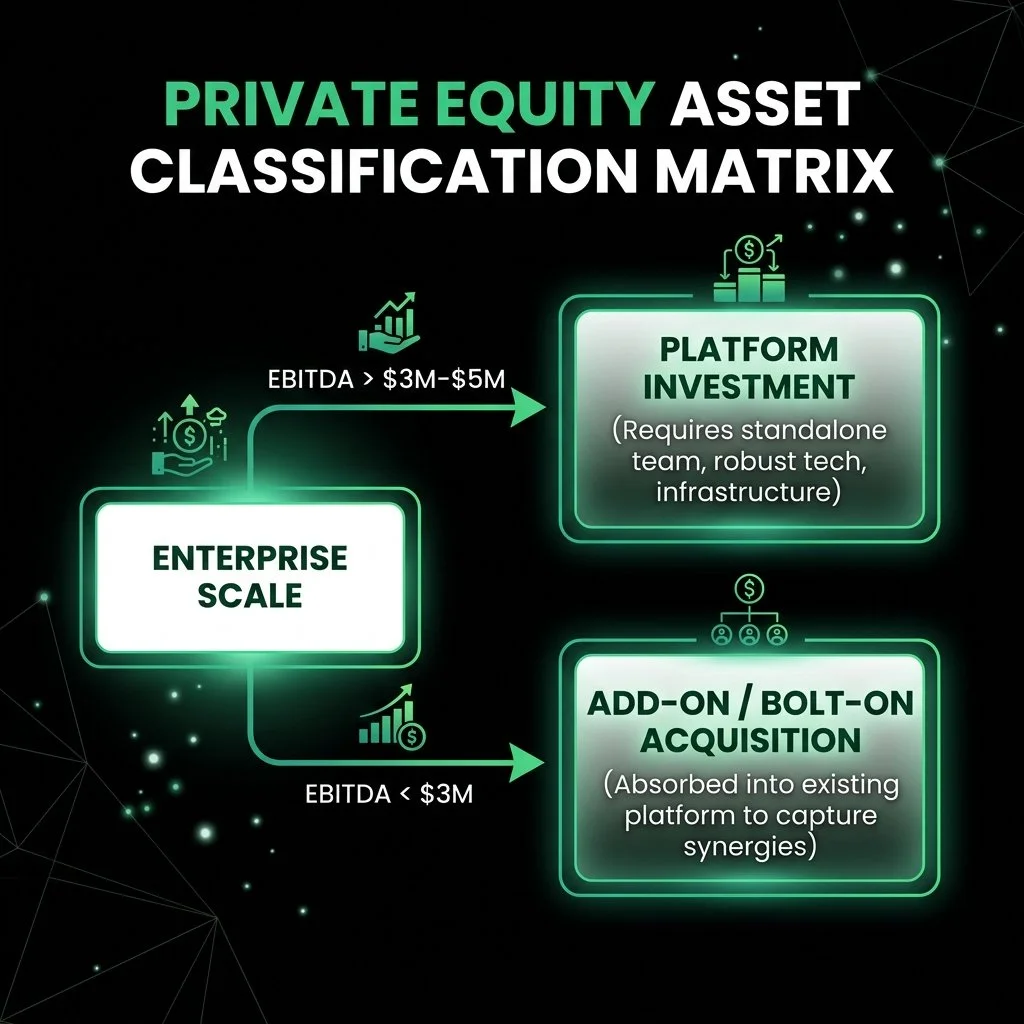
Before learning how to list my business or seeking out institutional buyers, a founder must understand how a private equity sponsor classifies their asset. Financial sponsors view acquisitions through two distinct strategic lenses: Platform Investments and Add-On (or Bolt-On) Acquisitions.
Private Equity Asset Classification Matrix
1. Platform Investments
A platform investment serves as the foundational cornerstone of a private equity firm’s thesis in a specific industry vertical. To qualify as a platform, your company must possess a complete, autonomous secondary management tier, scalable enterprise software, proprietary intellectual property or geographic dominance, and clean, institutional financial reporting. Platform acquisitions command premium valuation multiples because they function as standalone engines capable of absorbing smaller competitors.
2. Add-On Acquisitions
If you are aiming to sell my business fast, or if your enterprise operates with less than $3 million in EBITDA, private equity firms will evaluate your business as an add-on target for one of their existing portfolio platform companies. Add-on acquisitions are highly valued for their immediate operational synergies—such as overlapping customer routes, cross-selling opportunities, or cost redundancies that can be eliminated post-closing. While add-on multiples may be lower than standalone platform premiums, the transactions often close faster with compressed due diligence cycles.
Section II: The Anatomy of a 2026 Leveraged Buyout (LBO)
To negotiate effectively with a financial sponsor, you must understand the mathematical architecture of their acquisition vehicle: the Leveraged Buyout.
In 2026, the traditional reliance on large syndicates of commercial banks has shifted toward private credit direct lenders. These non-bank institutions provide flexible, cash-flow-based debt facilities that allow private equity firms to fund transactions rapidly, balancing equity checks with senior secured and subordinated debt.
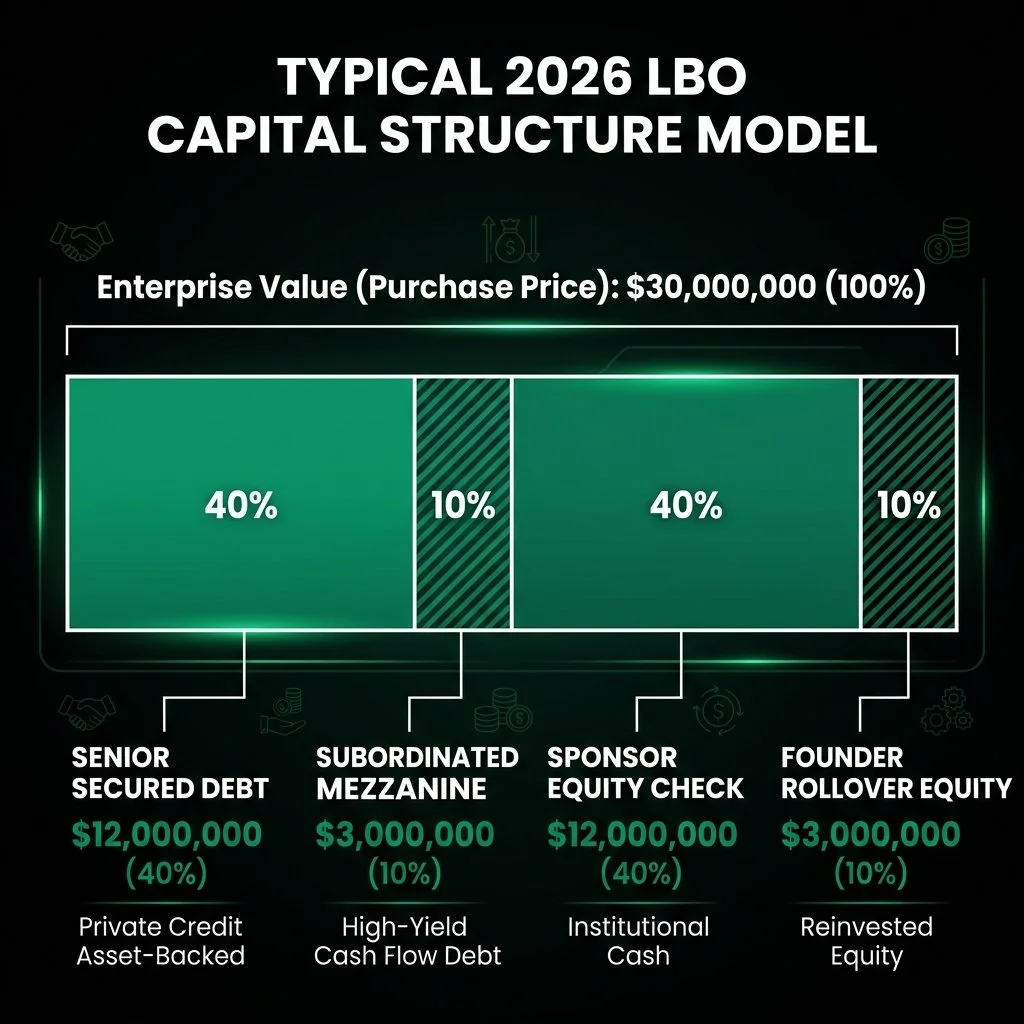
Typical 2026 LBO Capital Structure Model
The Power of Financial Leverage
The sponsor’s objective is to maximize their Internal Rate of Return (IRR) upon exit, typically aiming for a 20% to 25% IRR over a 3-to-5-year holding period. They achieve this by using your company's stable operating cash flows to pay down the principal debt balances incurred during the buyout. Consequently, when you plan to sell a business to a PE firm, their valuation offer will be directly constrained by how much leverage your company's balance sheet can safely support.
Section III: The Critical Variable – Structuring Rollover Equity and Earnouts
Rarely does a private equity sponsor buy 100% of a company for all-cash at closing. To mitigate execution risk and guarantee leadership alignment, sponsors utilize sophisticated financial structures.
1. Rollover Equity: "The Second Bite of the Apple"
Sponsors almost universally require founders to execute a rollover equity contribution. This mechanism mandates that you reinvest 10% to 25% of your pre-tax sale proceeds into the newly formed holding company.
Strategic Consideration: Rollover equity aligns your long-term financial interests with the sponsor. If the private equity firm successfully executes its growth strategy, triples the size of the business, and exits to a larger fund in five years, your rolled equity can yield a secondary payout—often referred to by Wall Street dealmakers as "the second bite of the apple"—that exceeds your initial cash proceeds at the first close.
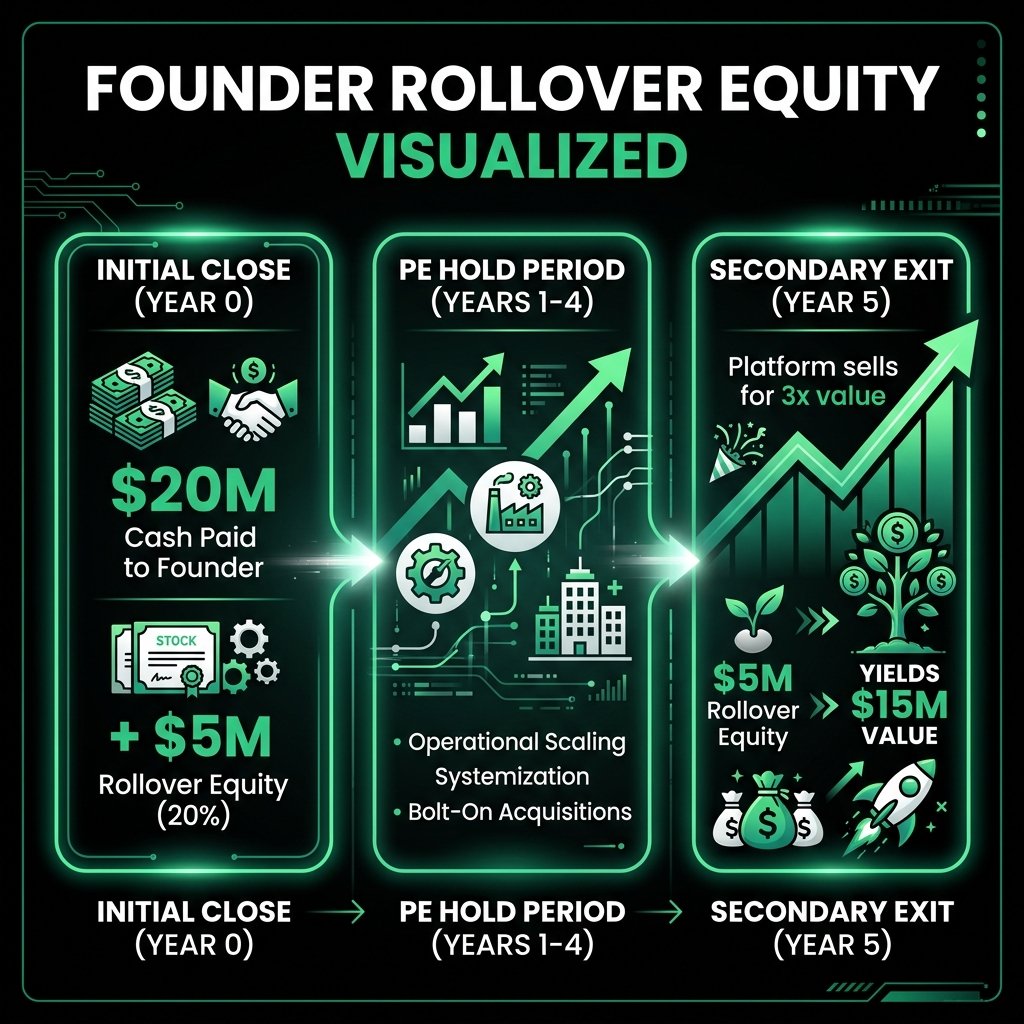
Founder Rollover Equity Visualized
2. Performance-Driven Earnouts
If a valuation gap exists between what you believe your company is worth and what the sponsor’s financial model justifies, the sponsor will propose an earnout. This structure binds a portion of the purchase price to the post-acquisition performance of the company, paying out trailing cash bonuses only if explicit EBITDA milestones or contract retention goals are achieved over a 12-to-36-month timeline.
Section IV: Sourcing Institutional Investors and Digital Dealmaking Platforms
Navigating an exit to a financial sponsor requires broad market reach. While high-volume investment banks historically guarded access to top-tier PE funds, the 2026 transaction lifecycle utilizes efficient digital platforms to optimize matching, preserve absolute confidentiality, and remove geographic barriers.
Founders seeking to bridge the gap between their business operations and sophisticated capital allocators leverage advanced online transactional ecosystems. If you are preparing to sell my business online, or want to learn how to position your company to attract institutional interest, consulting specialized guides such as the 2026 guide on where to find investors for my business is a crucial initial step.
Rather than traditional, untargeted outreach, modern deal structuring relies on specialized marketplaces. Founders can leverage the central Funding My Venture Businesses Portal or specifically categorize their venture within the dedicated Businesses for Sale Section to engage verified buy-side private equity professionals, corporate development executives, and search funds actively hunting for specific industrial profiles.
Section V: Sector-Specific Private Equity Investment Playbooks
The specific mechanics of a private equity exit depend on your industry asset class. Sponsors analyze varying regulatory, risk, and operational profiles across different verticals.
1. High-Growth Software, SaaS, and FinTech Platforms
Technology sponsors evaluate targets based on the Rule of 40 (Year-over-Year Revenue Growth Rate + EBITDA Margin % $\ge$ 40%). When executing strategies to sell a startup, list a startup for sale, or preparing to sell my startup, you must present deep data tracks regarding Net Revenue Retention (NRR) and Low Customer Acquisition Costs (CAC).
Enterprises like Nexbridge Digital Bank represent clear examples of the highly systematized, regulatory-compliant digital platforms that draw intense focus from growth equity sponsors seeking scalable financial technologies.
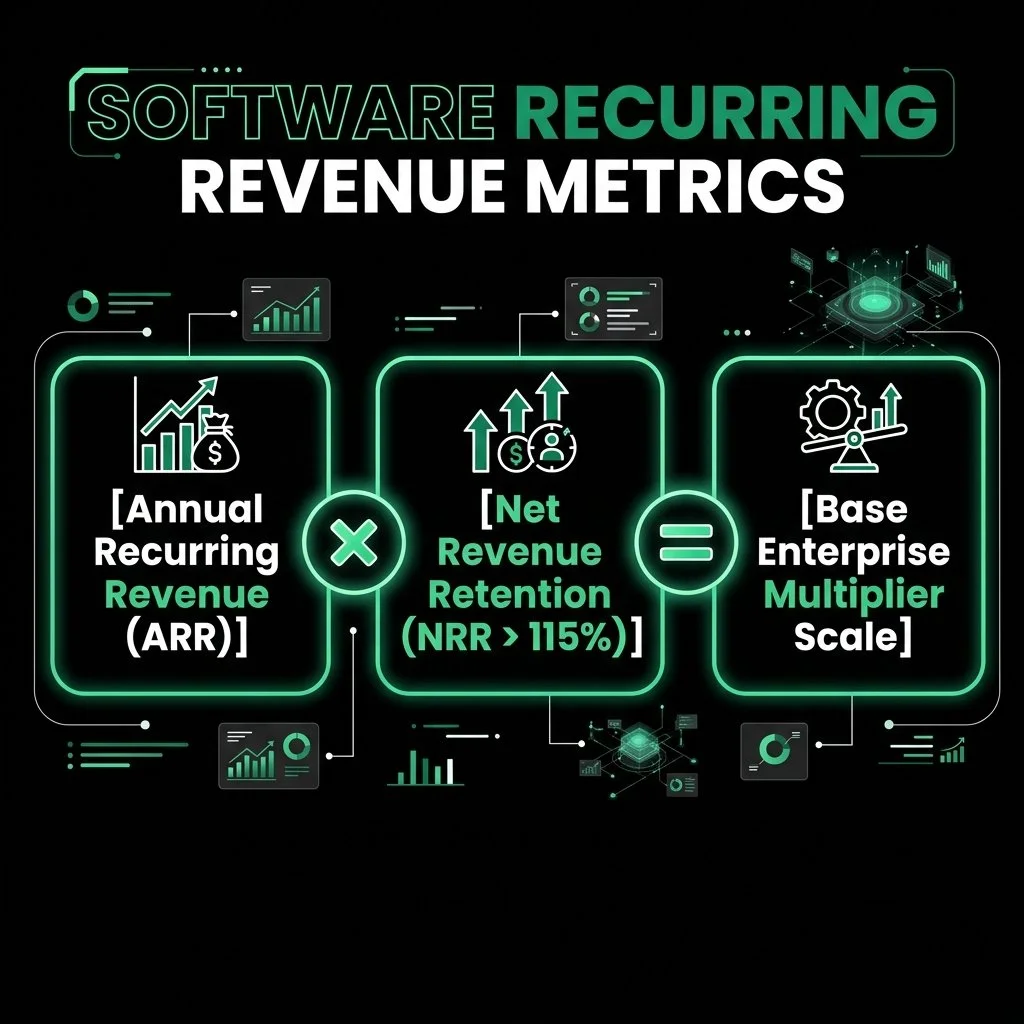
Software Recurring Revenue Metrics
2. Commercial Real Estate and Hospitality Consolidation
Private equity real estate funds (PERE) evaluate assets using capitalization rates, debt service coverage ratios (DSCR), and asset optimization playbooks. Founders preparing to sell a hotel or figuring out how to sell my hotel must provide clear operational metrics alongside physical property assessments.
Institutional capital teams scouring the market via networks like the Hotel For Sale Near Me Institutional Guide target yield-producing properties. Premium commercial sites—such as the Chicago Marriott North Conference Hotel—illustrate the scale, predictable conference revenue streams, and corporate brand alignment required to clear institutional investment committee hurdles.
3. Retail Energy, Infrastructure, and Fuel Distribution
Roll-up funds target non-cyclical, retail energy infrastructure due to its continuous cash generation. Business owners evaluating how to sell a gas station or preparing to sell my gas station must resolve potential environmental issues before engaging institutional funds.
Sponsors targeting logistics networks look for route density and stable performance, as explored in the operational assessment of gas stations for sale in Houston, Texas. Strategic, stable assets like the Circle K Gas Station for sale in Houston, TX showcase the stable fuel volumes, high-margin in-store operations, and corporate tenant backing that private equity buyers require for long-term real estate investment playbooks.
4. Cash-Flow Heavy Local and Service Franchises
Lower-middle-market private equity roll-up strategies aggressively buy up fragmented consumer and commercial service companies. If you choose to market a laundromat for sale, sell a dry cleaner, or advertise a high-margin power wash business for sale, your company is highly attractive to regional platform consolidators.
Turnkey operations, such as the Capitol Cleaners Laundry Center, demonstrate how strong local brand presence, modern facilities, and recurring customer bases can be integrated into a private equity firm's regional consolidation strategy.
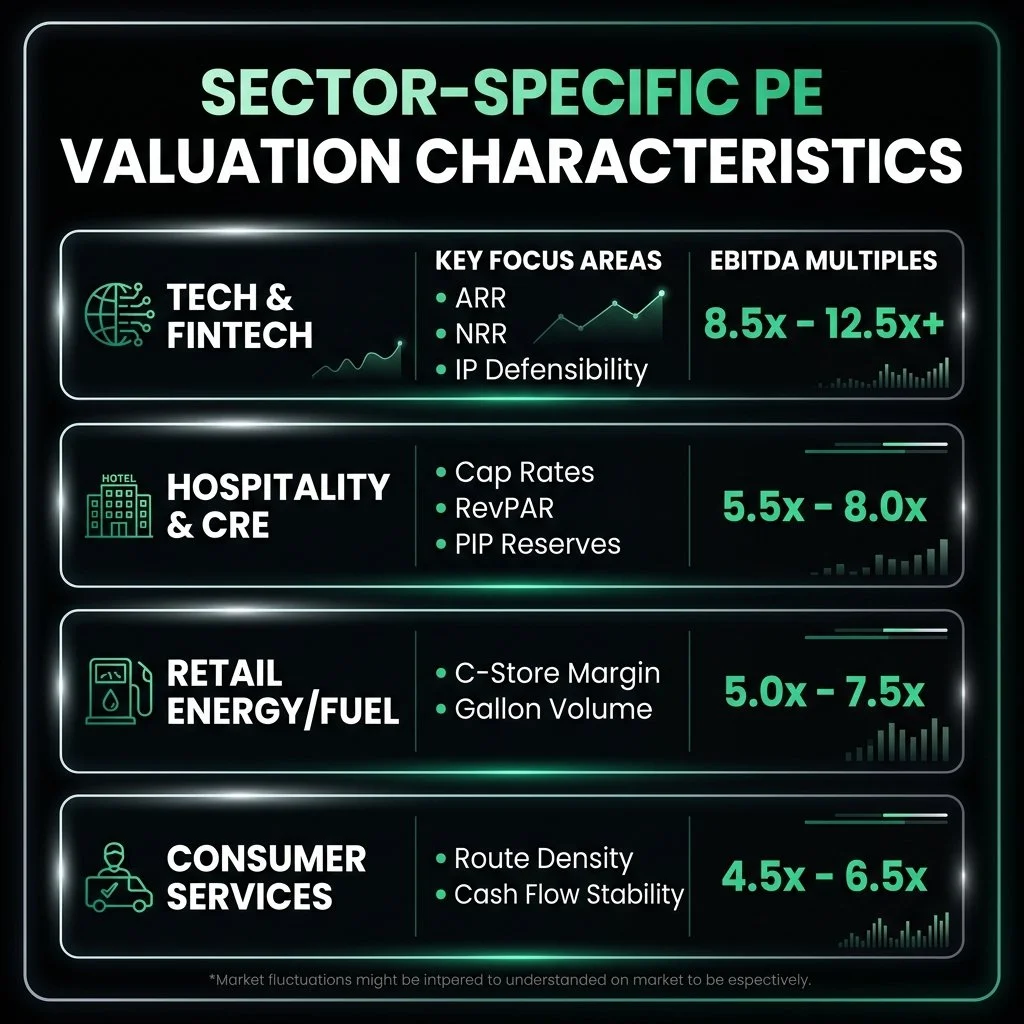
Sector Specific Private Equity Valuation Characteristics
Section VI: Managing the Due Diligence Crucible
Once you sign a Letter of Intent (LOI) with a private equity sponsor, your company enters an intensive 60-to-90-day period of exclusive confirmatory due diligence. Private equity due diligence is far more rigorous than standard strategic acquisition reviews, as sponsors bring in elite, third-party professional advisory teams.
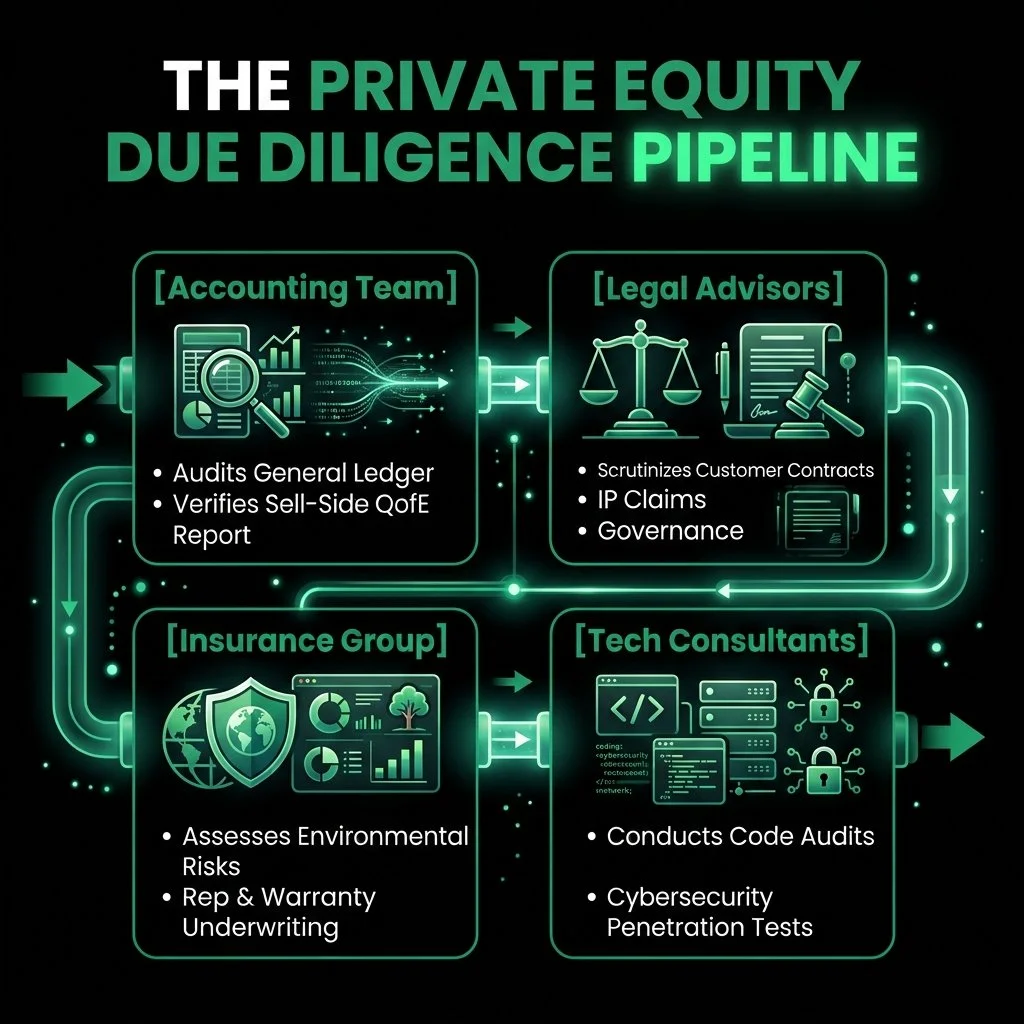
The Private Equity Due Diligence Pipeline
1. Financial and Tax Diligence: The Quality of Earnings (QofE)
Sponsors hire Tier-1 accounting firms to verify your historical EBITDA calculations. They analyze your revenue recognition methods, tracking every transaction back to bank statements, and review your historical net working capital levels. Any unverified personal add-backs or sudden declines in monthly recurring revenues can lead to a renegotiation of your valuation—a process known on Wall Street as a "re-trade."
2. Legal, Regulatory, and Contractual Diligence
The buyer's legal team evaluates all material customer contracts to confirm the presence of Change of Control clauses. If your top customers can legally terminate their agreements when you sell the business, the private equity firm will pause the transaction until those agreements are updated or restructured.
3. Mitigating Risks When Selling With Debt
Sponsors restructure the capital foundations of the businesses they acquire. If you need to sell my company with debt, you must identify all outstanding senior notes, equipment lines, and corporate liabilities early.
Sponsors expect a clean, cash-free, debt-free closing. To learn how to manage these balance sheet adjustments and position your company for smooth institutional transfers, founders utilize corporate tools such as the Funding My Venture Funding Solutions Portal.
Section VII: Strategic Negotiation Tactics for Founders
To protect your valuation and maintain leverage when dealing with private equity professionals, avoid negotiating in isolation. Implement these proven institutional frameworks:
Generate Competitive Tension: Never negotiate with only one private equity sponsor. Run a structured, competitive auction process. When multiple sponsors compete for your asset, valuation multiples expand, exclusivity periods compress, and indemnity terms become more seller-friendly.
Control the Narrative with a Sell-Side QofE: Commission an independent, sell-side Quality of Earnings report before entering negotiations. By presenting an objective, audited financial report on day one, you establish a solid baseline for your valuation and prevent the buyer's analysts from chipping away at your earnings figures during diligence.
Focus on the Net Equity Waterfall: Do not get distracted by the headline enterprise value in the LOI. Focus on the net equity waterfall—the actual cash wired to your bank account at closing after accounting for taxes, rollover commitments, escrows, debt payoffs, and transaction advisory fees.
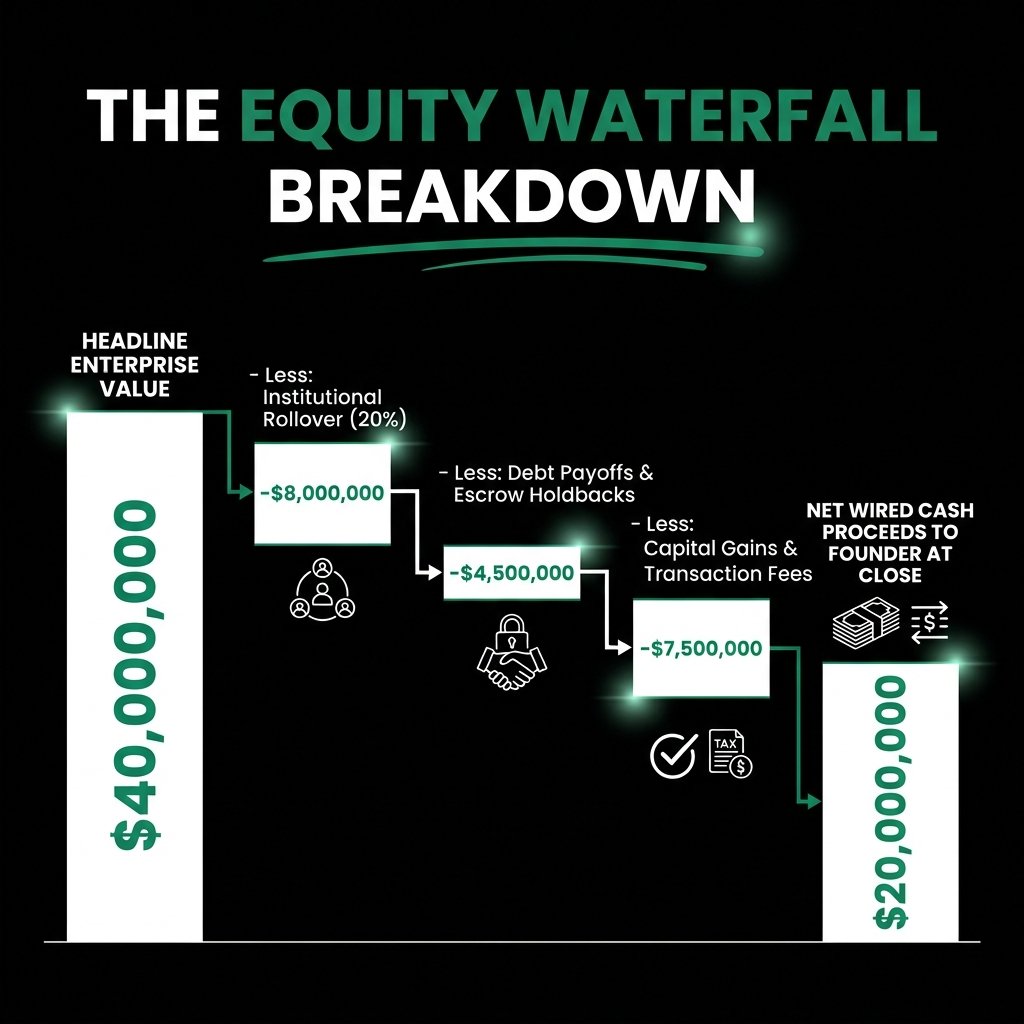
The Equity Waterfall Breakdown
Section VIII: Engaging the Founder and Entrepreneur Ecosystem
Navigating an institutional corporate exit requires specialized personal advice, structural financial strategies, and peer-to-peer insights.
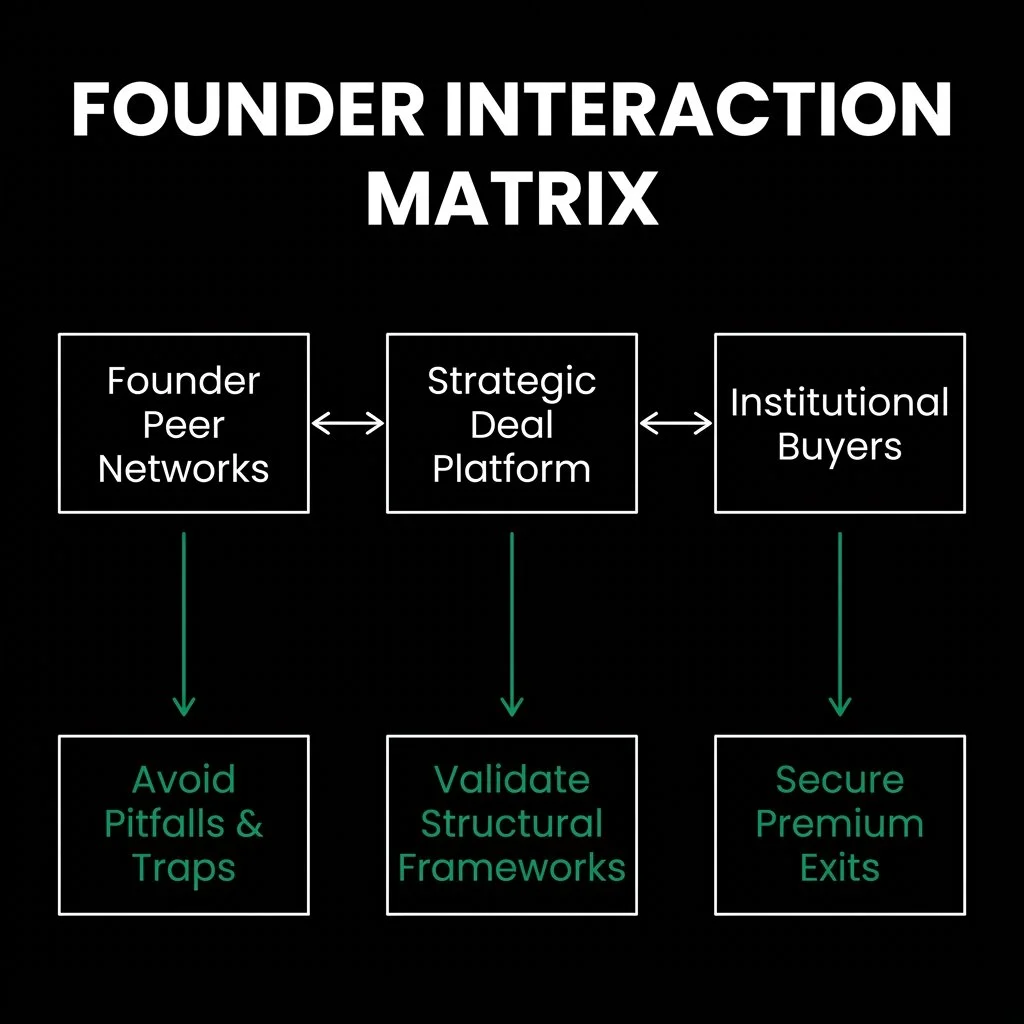
Founder Interaction Matrix
To avoid costly deal traps, founders leverage curated business networks. Reviewing why business owners choose Funding My Venture provides clear insight into how modern operators prepare for corporate sales.
Joining specialized peer groups, such as the Funding My Venture Online Community for Founders and Entrepreneurs, allows business owners to share real-time transaction insights, access verified legal templates, and review advanced financing vehicles like the Green Page Startup Funding Architecture.
For institutional buyers, family offices, and cross-border aggregators looking for pre-vetted corporate targets, access to the central Funding My Venture Investor Hub provides immediate entry into a premier deal-flow ecosystem.
Section IX: The Private Equity Exit Execution Checklist
Before initiating formal conversations with private equity firms, make sure your corporate records are fully organized:
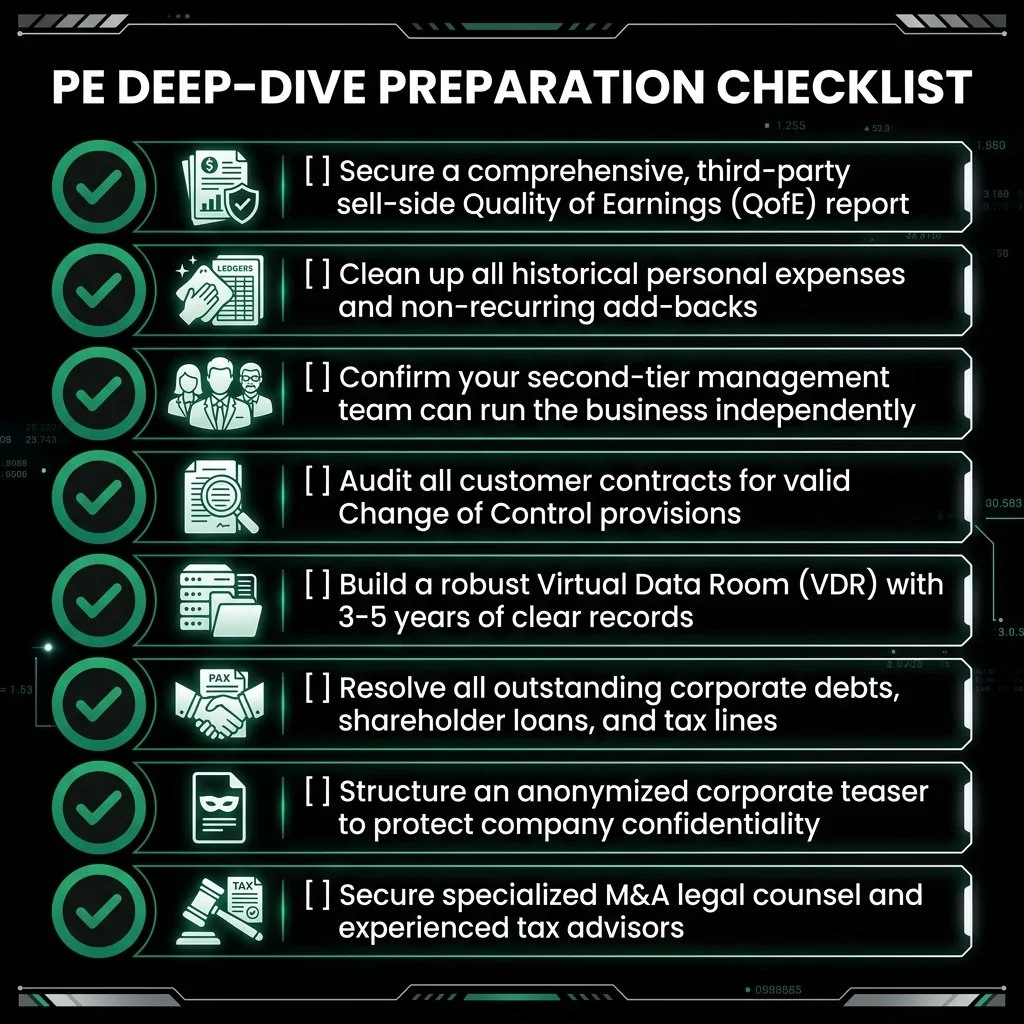
Private Equity Deep-Dive Preparation Checklist
Section X: Conclusion – Securing Your Multi-Generation Exit
Selling your company to a private equity firm is one of the most sophisticated financial transactions an entrepreneur can undertake. While sponsors are highly disciplined negotiators driven by strict financial models, their access to substantial capital reserves presents an excellent opportunity to realize your enterprise value, secure your financial legacy, and secure capital for your company's next phase of growth.
By structuring your financials thoroughly, setting up a competitive auction process, and utilizing advanced online deal networks, you can negotiate on equal footing with institutional buyers and secure a highly successful corporate exit.
To list your business, review live institutional opportunities, or engage directly with top private equity networks, explore these primary deal-flow resources:
Confidential Marketplace Entry:List My Business on Funding My Venture
Discover Premium Opportunities:Browse Core Businesses For Sale
Capital Structuring Options:Explore Advanced Funding Solutions
Direct Private Equity Sourcing:Access the Investor Hub
Extended Keyword Matrix Appendices (Contextual Indexing)
For alternative transaction configurations or specific localized searches, review the following situational toolkits:
Alternative Local Options: For business owners searching for local sales solutions, exploring a business for sale by owner or looking for a business for sale by owner near me can provide direct-to-buyer alternatives.
Speed-Driven Alternatives: When market conditions require you to sell my business fast, utilizing modern digital matching systems allows you to list my business for sale to quickly reach targeted cash buyers across the sell my business usa network or find local buyers through sell my business near me channels.
Early Stage Concepts: If your venture is pre-revenue and centered on intellectual property, learning how to safely protect and sell my business idea is a critical alternative path to traditional private equity buyouts.