
How to Find Hotel Foreclosure Listings For Sale
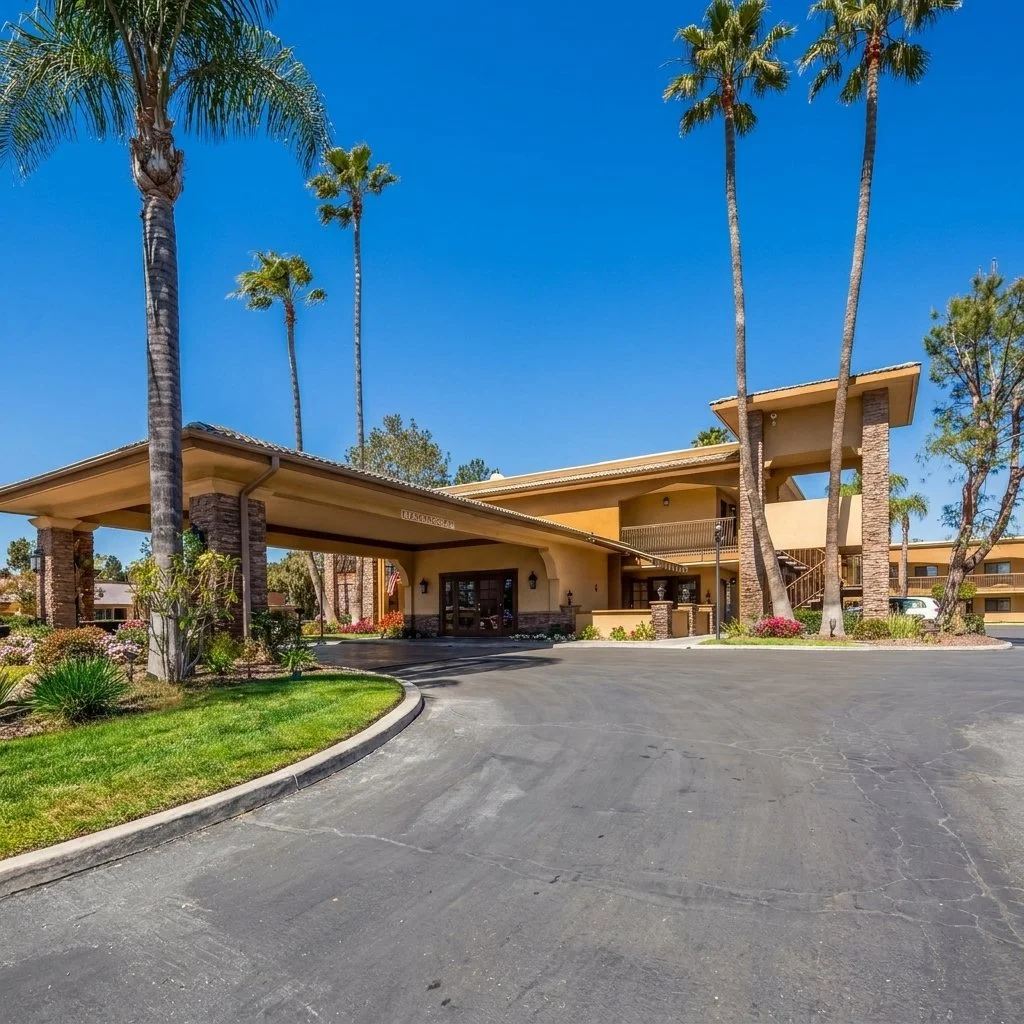
When a foreclosed hotel reaches a public trustee auction or enters a lender's Real Estate Owned (REO) department, it presents a chance to purchase hotels at steep discounts to replacement cost.
In commercial real estate, macroeconomic shifts and refinancing cliffs create unique entry points for opportunistic capital.
As special servicing rates across Commercial Mortgage-Backed Securities (CMBS) and regional bank balance sheets fluctuate, acquiring a foreclosed hotel for sale like the Empire Inn in San Bernadino, CA or distressed commercial lodging asset has emerged as a premier strategy for high-yield investors.
When a foreclosed hotel reaches a public trustee auction or enters a lender's Real Estate Owned (REO) department, it presents a chance to purchase hotels at steep discounts to replacement cost. However, navigating the distressed segment of the hospitality industry requires a specialized playbook. Unlike traditional acquisition channels where a standard hotel seller lists a fully operational asset, sourcing a hotel foreclosure sale involves tracking special servicer notices, negotiating non-performing notes (NPLs), working with court-appointed receivers, and structuring high-speed capital rescue plans.
Whether you are an institutional hotel buyer, an ambitious private equity fund, or an experienced hospitality operator, this comprehensive guide provides the step-by-step roadmap to sourcing, underwriting, and closing distressed hotels for sale in 2026.
1. Understanding the Distressed Hotel Market: Mechanics & Terminology
To monitor hotel foreclosure news and evaluate distressed opportunities effectively, a hotel investor must understand how commercial hospitality loans fall into default and move through the liquidation pipeline.
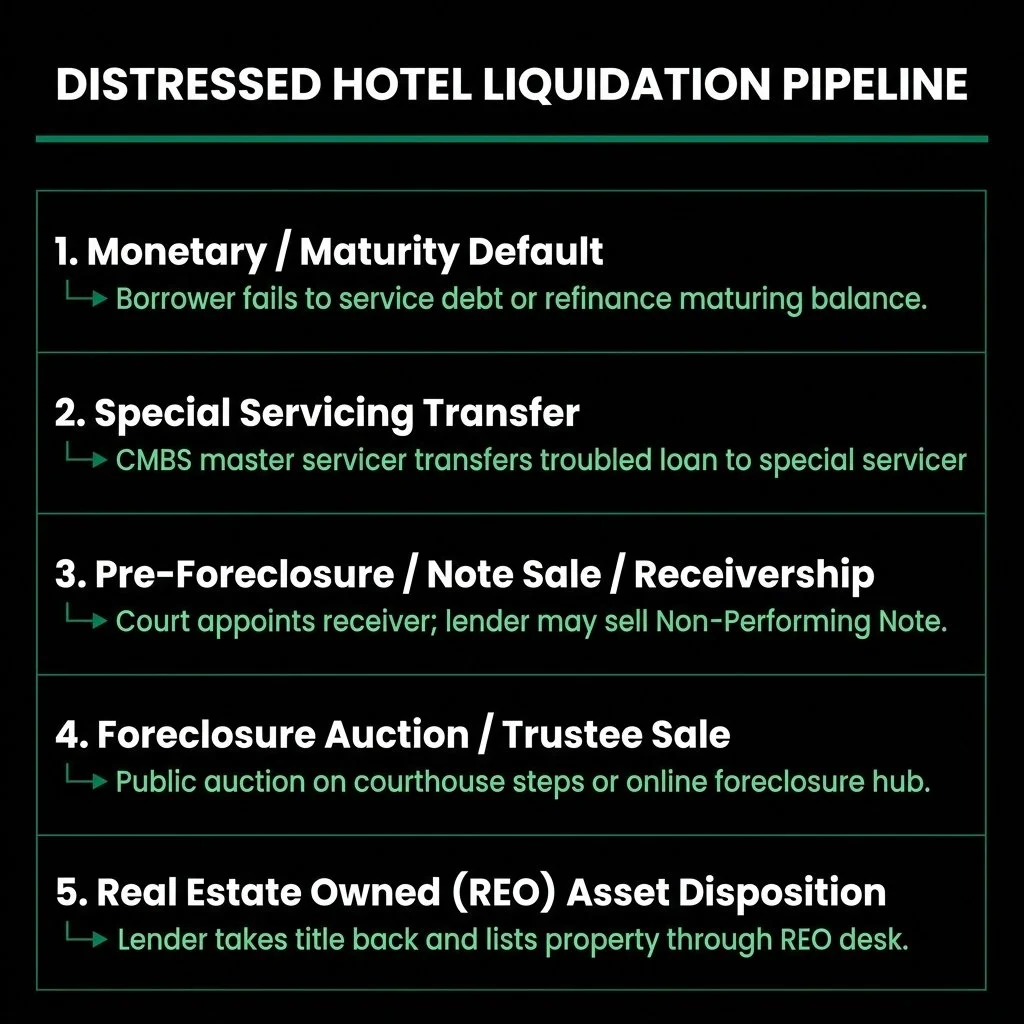
Lenders typically seek to liquidate REO assets quickly to clear non-performing assets from their balance sheets.
Key Distressed Real Estate Terminology
Non-Performing Note (NPN): A mortgage loan that is in default due to non-payment. Buying the note allows an investor to either negotiate a debt workout with the borrower or complete the foreclosure to take fee-simple title.
Special Servicer: An institutional entity responsible for managing defaulted CMBS loans. Special servicers evaluate whether to grant loan modifications, sell the defaulted paper, or execute a hotel foreclosure sale.
Court-Appointed Receivership: A legal remedy where a judge assigns a neutral third-party hotel operator to manage operations, safeguard cash flows, and preserve asset value during ongoing foreclosure proceedings.
Real Estate Owned (REO): Properties that fail to sell to a third-party bidder at foreclosure auction and revert to bank ownership. Lenders typically seek to liquidate REO assets quickly to clear non-performing assets from their balance sheets.
2. Where to Find Foreclosed Hotels and Distressed Listings
Unlike conventional marketplace transactions where a broker will list a hotel for sale on public listing portals, prime distressed assets rarely hit mainstream platforms right away. Accessing high-margin deal flow requires targeted sourcing across four primary channels.
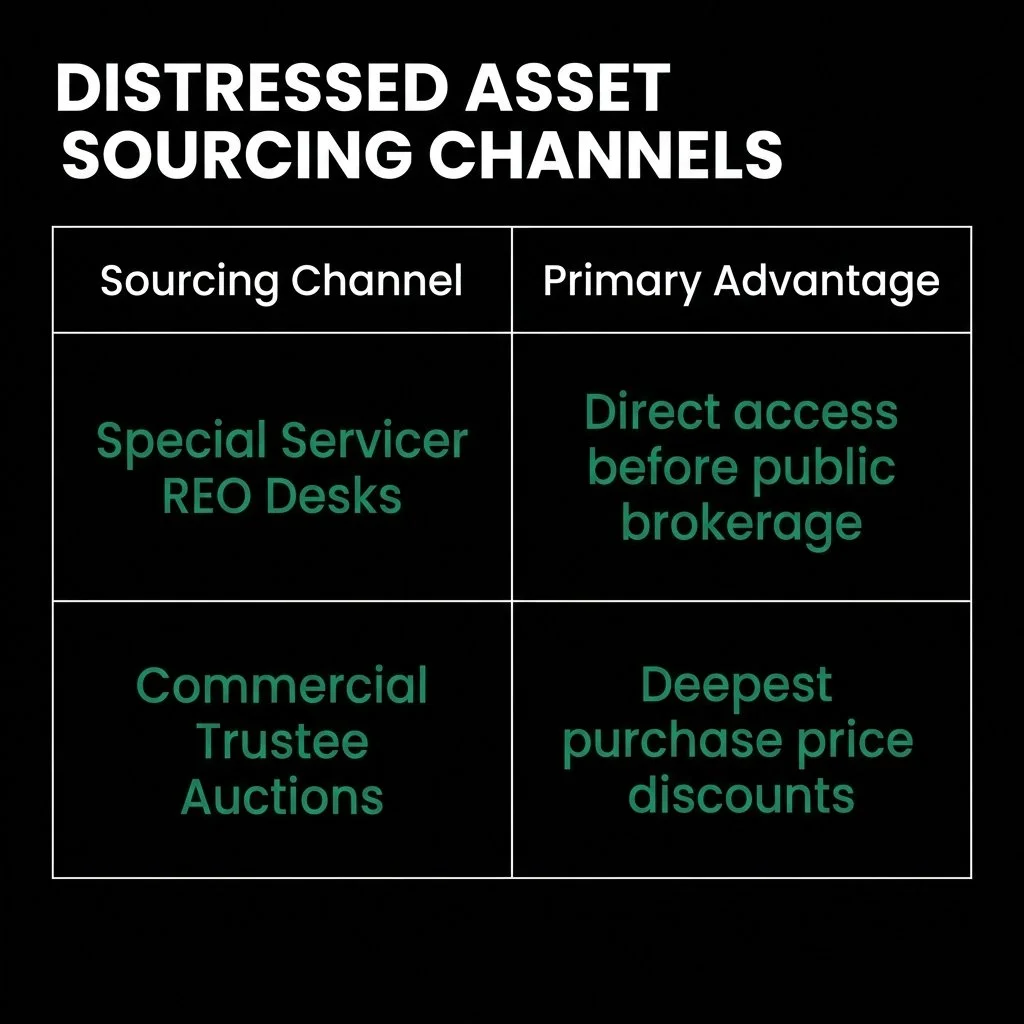
To supplement public foreclosure filings, savvy investors use targeted research tools to uncover off-market distressed deals.
1. Special Servicers and Bank REO Departments
Lenders do not want to act as permanent hotel owners. Major commercial banks, credit unions, and CMBS special servicers maintain internal REO disposition desks. Building direct relationships with asset managers at these institutions allows you to evaluate hotels for purchase before they are marketed publicly.
2. Commercial Auction Platforms & Courthouse Filings
Judicial and non-judicial foreclosure auctions are conducted regularly across county courthouses and specialized commercial auction portals. Monitoring public notice filings, lis pendens databases, and court dockets provides early warnings on imminent foreclosure sales.
3. Note Sale Advisory Firm Networks
Rather than going through a lengthy foreclosure process, many lenders prefer to sell defaulted mortgage notes to qualified funds. Acquiring the note at a 20% to 40% discount allows a hotel buyer to either restructure terms with the existing hotel owner or enforce a deed-in-lieu of foreclosure.
4. Specialized Off-Market Sourcing Channels
To supplement public foreclosure filings, savvy investors use targeted research tools to uncover off-market distressed deals. If you are beginning your market search, review our regional analytical guides:
3. How to Underwrite a Foreclosed Hotel for Sale
Underwriting a foreclosed hotel for sale requires a different approach than analyzing a stabilized commercial asset. Books and records may be incomplete, trailing-12 (T12) financial statements may be distorted by owner distress, and deferred maintenance is almost guaranteed.
When calculating how much does it cost to buy a hotel in foreclosure, investors must build a zero-based budget that includes all hidden line items:
Total Foreclosure Cost Basis = Auction / Note Purchase Price + Past-Due Property Taxes + Mechanics' Liens + Franchise PIP + Working Capital
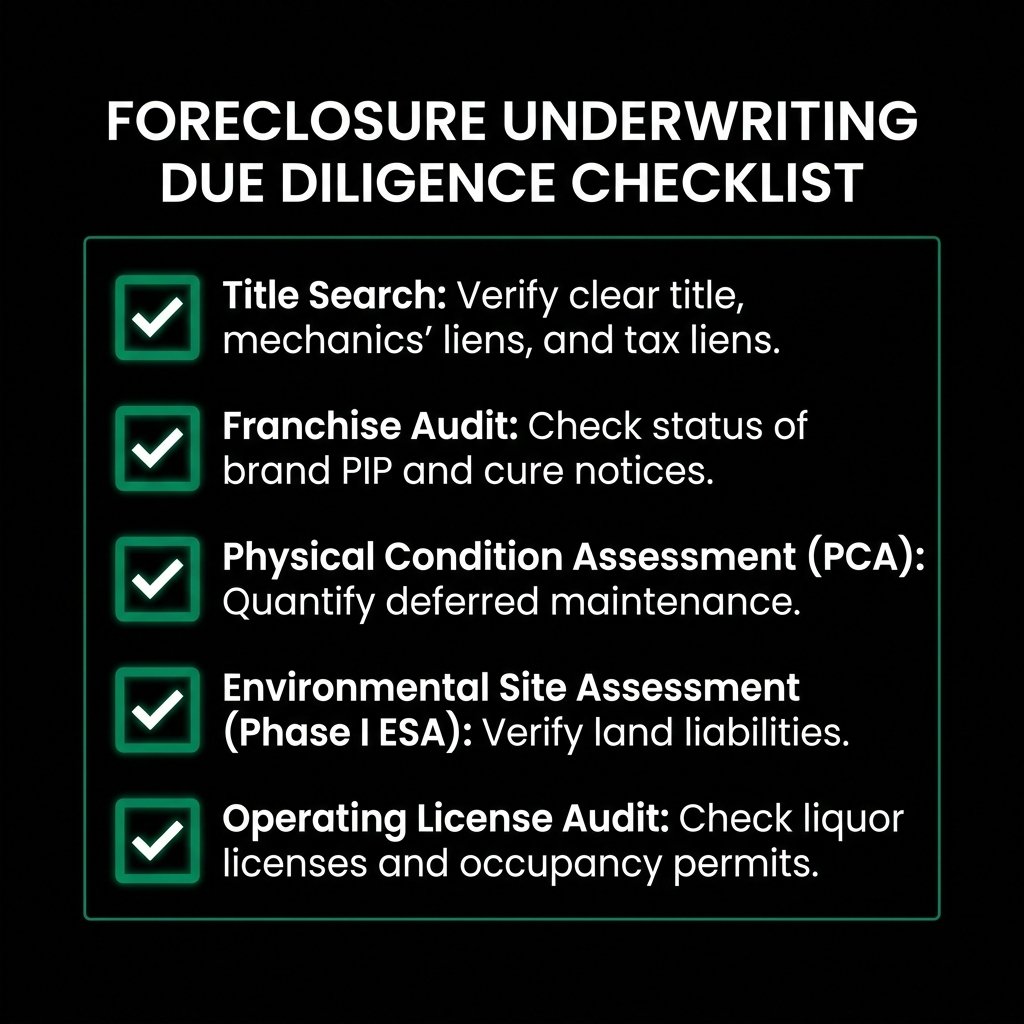
You must budget sufficient bridge liquidity to fund initial payroll and operational ramp-up.
Critical Due Diligence Factors
Lien Clearing and Title Insurance: Distressed assets often carry secondary encumbrances, unpaid municipal utility bills, and mechanics' liens. Obtaining a comprehensive title commitment is critical before putting earnest money at risk.
Franchise Property Improvement Plans (PIPs): If you plan to retain an existing brand flag (such as Marriott, Hilton, or IHG), the franchisor will mandate a full PIP. A heavy PIP can cost between $15,000 and $40,000 per key, rapidly eroding your initial foreclosure discount.
Working Capital Injection: Distressed assets often lack basic operating inventory—linens, food and beverage stock, and operational supplies. You must budget sufficient bridge liquidity to fund initial payroll and operational ramp-up.
4. Financing Foreclosures: Securing Hotel Purchase Financing
Securing hotel purchase financing for a distressed or foreclosed property presents unique debt structuring challenges. Traditional institutional lenders rarely issue conventional 30-year or 10-year mortgages on un-stabilized, non-performing assets with negative Net Operating Income (NOI).
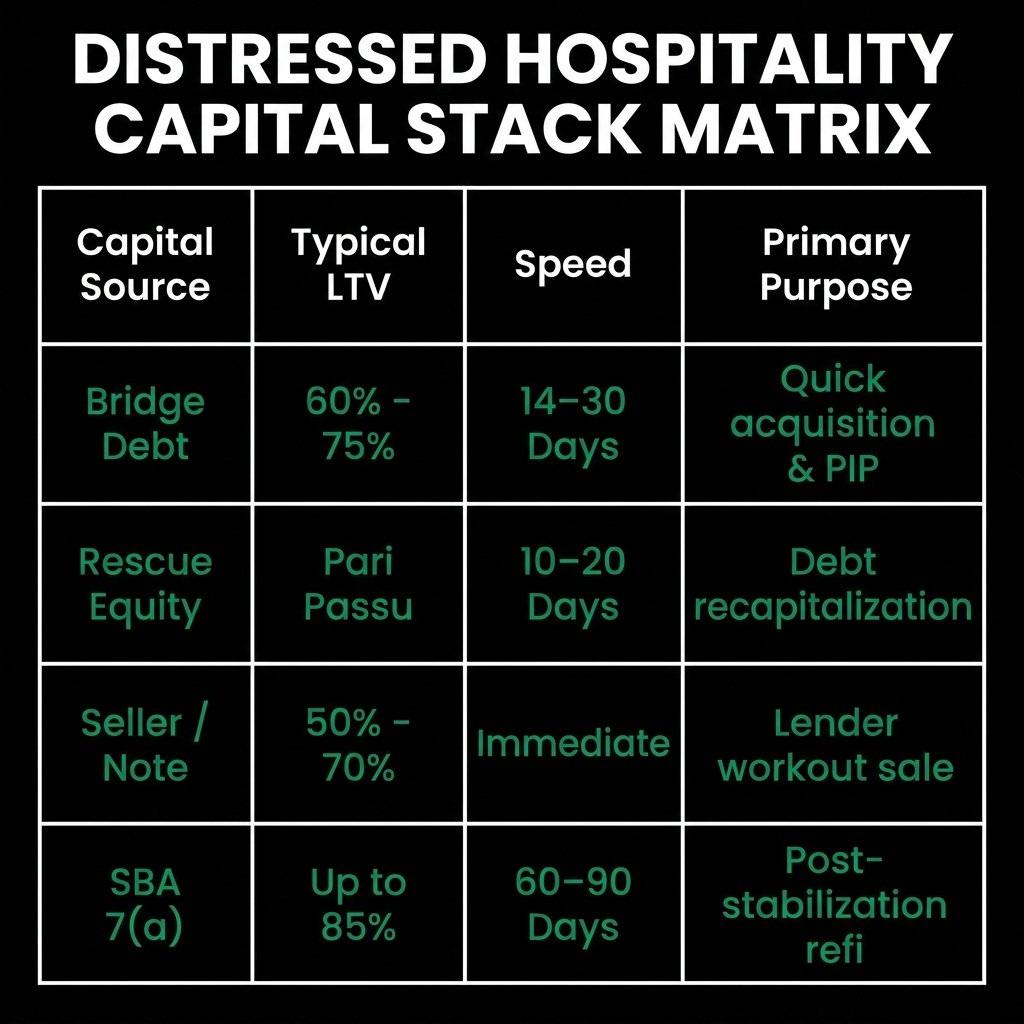
For flexible capital structures tailored to value-add acquisitions, explore specialized funding through Funding Solutions.
Debt Options for Distressed Buyers
Private Bridge Debt: High-speed, short-term debt (1-to-3-year term) designed for turnaround acquisitions. Bridge lenders focus on the post-renovation "as-completed" value rather than historical cash flow.
Rescue Equity & Co-Investment: Partnering with institutional equity providers allows buyers to submit all-cash bids at public foreclosure auctions, securing the asset before refinancing into long-term debt later.
SBA Financing (Post-Stabilization): Once an owner-operator restores positive cash flow and clears past default history, the asset can be refinanced into long-term SBA 504 debt.
For flexible capital structures tailored to value-add acquisitions, explore specialized funding through Funding Solutions.
5. Step-by-Step Guide to Buying a Foreclosed Hotel
To navigate the complex legal and operational process, follow this structured acquisition blueprint:
1.Identify Distressed Targets: Monitor legal notices, special servicers, and REO platforms.
Track foreclosure notices, lis pendens filings, CMBS default lists, and bank REO portals. Establish direct communication lines with court-appointed receivers and special servicing asset managers.
2.Perform Forensic Due Diligence: Audit title encumbrances, physical deferred maintenance, and PIPs.
Order preliminary title reports to identify tax liens or junior encumbrances. Conduct an immediate engineering assessment to quantify physical deferred maintenance and estimate mandatory franchise PIP expenses.
3.Arrange High-Speed Financing: Secure high-speed bridge debt or equity co-investment funds.
Because trustee auctions require fast closing terms—often requiring funds within 24 to 48 hours—secure proof of funds or pre-approved bridge capital prior to auction day.
4.Bid at Auction or Negotiate REO Purchase: Submit competitive bid at auction or negotiate direct REO purchase.
Attend the public trustee auction or negotiate directly with the lender's REO officer. Calculate your maximum allowable bid (MAB) based on your post-renovation exit valuation.
5.Execute Asset Takeover & Turnaround: Take physical possession, install management, and execute turnaround.
Upon receiving the trustee's deed or closing the REO purchase agreement, immediately deploy an experienced operational team to stabilize operations, restore customer satisfaction, and drive RevPAR growth.
6. Real-World Asset Underwriting: Market Case Examples
To understand how operational focus and location dynamics impact value-add turnaround strategies, examine how distinct commercial assets operate across key U.S. metropolitan markets:
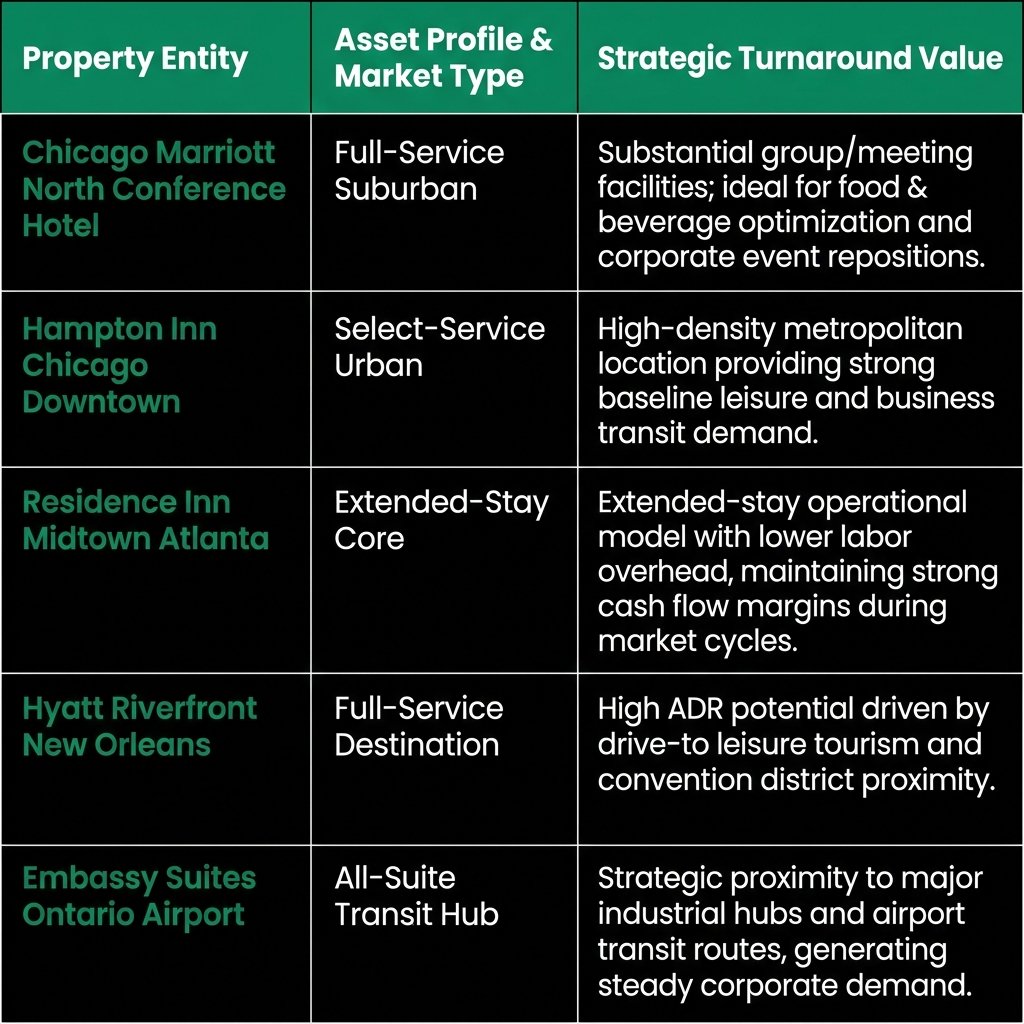
Acquiring a foreclosed property is only half the battle; successfully turning around operations requires experienced management.
Analyzing varied operational structures helps investors build realistic pro forma models when preparing to buy hotel properties out of default.
To evaluate active deal flow and review structured acquisition opportunities, visit and browse our curated hospitality inventory under Funding My Venture Hospitality Businesses.
7. Operational Recovery: Working with Specialized Management Partners
Acquiring a foreclosed property is only half the battle; successfully turning around operations requires experienced management. Distressed acquisitions frequently suffer from low employee morale, poor online review scores, and broken vendor relationships.
An experienced hospitality operator will execute an immediate 90-day stabilization plan:
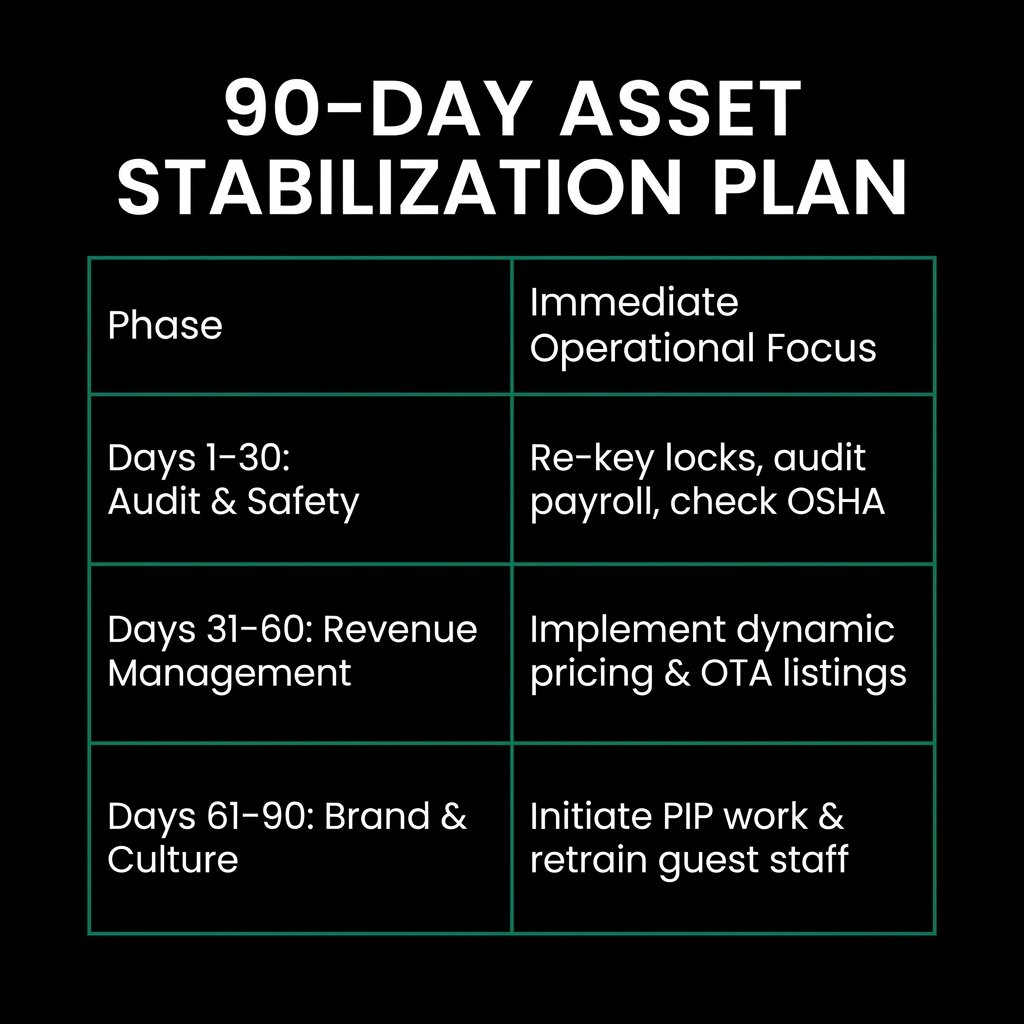
Once you have stabilized operations, increased RevPAR, and restored profitability, you can select your long-term exit strategy.
When working with institutional syndicates, partnering with structured co-investment groups like Summit Hospitality Capital helps align equity deployment with experienced management.
8. The Exit Strategy: Selling or Refinancing a Turnaround Asset
Once you have stabilized operations, increased RevPAR, and restored profitability, you can select your long-term exit strategy.
Primary Exit Paths
Refinance and Hold: Transition out of high-cost bridge debt into long-term, fixed-rate debt, allowing you to hold the asset for passive cash flow as a long-term hotel owner.
Institutional Sale to Private Equity: Package the stabilized asset for sale to institutional buyers. When a hotel sold private equity transaction closes, the seller realizes their upside via cap rate compression.
Bring Asset to Open Market: If you decide "It is time to sell my hotel," work with a top commercial broker to list a hotel for sale across global investor networks. Understanding how to sell a hotel after executing a successful turnaround strategy ensures you capture maximum valuation from the next hotel buyer.
9. Why Distressed Investors Partner with Funding My Venture
Navigating the distressed commercial hospitality market requires speed, deep underwriting capabilities, and trusted capital networks.
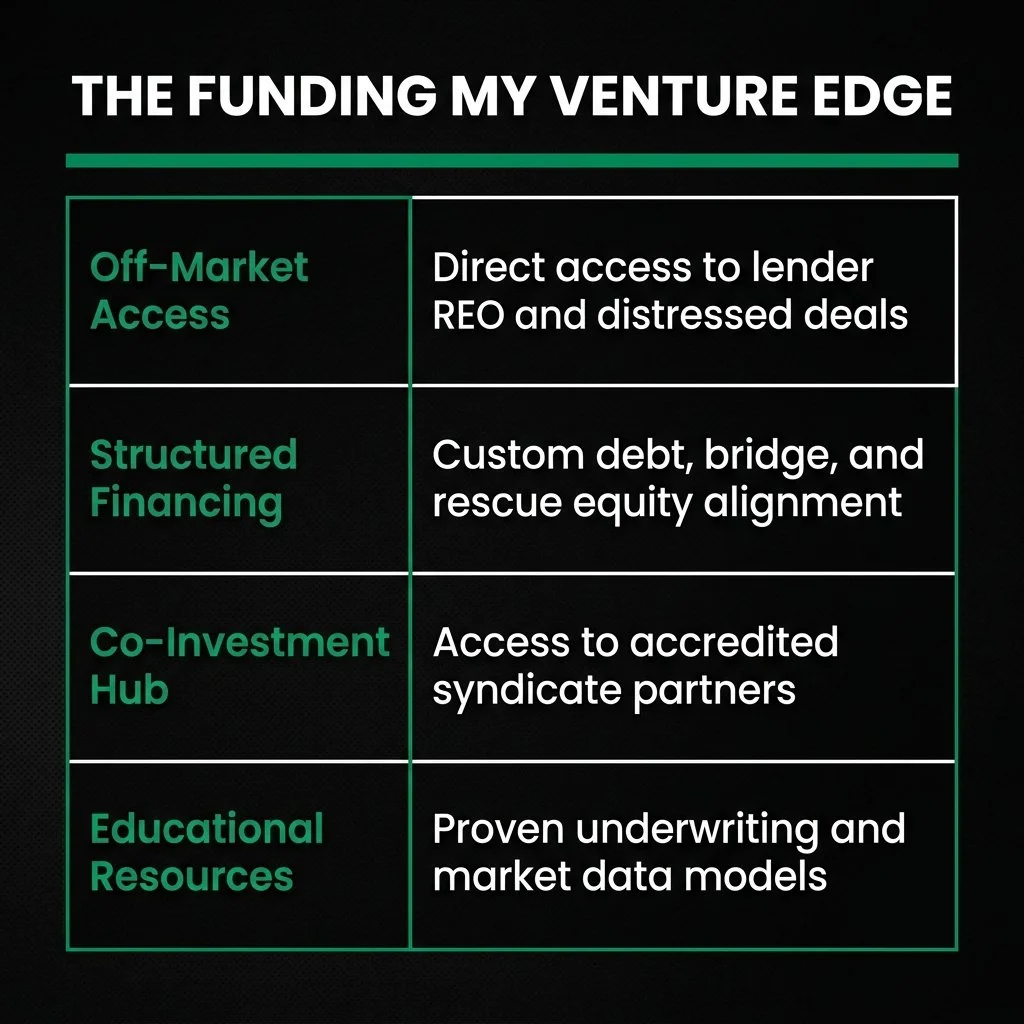
Pair your capital with experienced management partners to execute efficient 90-day stabilization plans.
To learn more about how our platform supports developers, syndicates, and equity partners, read our overview: Why Business Owners Choose Funding My Venture.
If you are an accredited investor, fund manager, or institutional hotel seller seeking capital or deal flow, access our portal at the Funding My Venture Investor Hub.
10. Key Takeaways for Distressed Hotel Buyers in 2026
Source Off-Market: Build direct relationships with special servicers, receivers, and lender REO desks rather than relying on public listing sites.
Account for Hidden Liabilities: Always perform thorough title searches and budget for deferred maintenance, unpaid taxes, and franchise PIPs.
Secure Flexible Debt: Secure bridge financing or rescue equity before bidding at public auctions.
Partner with Top Operators: Pair your capital with experienced management partners to execute efficient 90-day stabilization plans.